

Using Tungsten Plates in TIG and Plasma Welding: 5 Benefits Explained
作者:kangbote 时间:2026-06-22 17:40:18
In the field of precision industrial welding, TIG welding (tungsten argon arc welding) and plasma arc welding require extremely high performance of equipment auxiliary materials and fixtures. Traditional copper and steel plates and fixtures have long faced many problems such as high temperature deformation, unstable arc, rapid wear and inadequate welding precision. As a refractory metal plate with high purity tungsten as the core raw material, tungsten plate has become a special high-performance auxiliary material for TIG welding and plasma welding by virtue of its extreme high-temperature resistance, abrasion resistance and high stability. At present, it has been widely used in aerospace, nuclear power, precision electronics, high-end automobile manufacturing and other high-precision welding scenarios.
In this article, we will combine the characteristics of welding working conditions, and explain in detail the 5 core advantages of tungsten plate for TIG and plasma welding, and also introduce the common application scenarios and selection techniques of tungsten rod.
What is tungsten plate for welding?
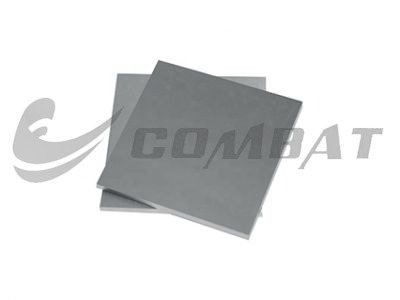
Tungsten plate is a sheet metal material made of high-purity tungsten powder through press molding, high-temperature sintering, precision rolling, annealing and surface finishing. The mainstream welding grade tungsten plates on the market are divided into three categories: high purity tungsten plates, tungsten-based heavy alloy plates, copper-tungsten composite plates, which strictly follow the ASTM B760, ASTM B777 industry standards.
Conventional high-purity tungsten plate purity up to 99.95% or more, is the highest melting point of the industry sheet metal, at the same time with low density expansion, high hardness, strong corrosion resistance, low vapor pressure and other comprehensive advantages, is suitable for extreme welding conditions of the special materials.
Many practitioners tend to confuse tungsten plate, tungsten carbide plate and tungsten welding rod, the three application scenarios are extremely different. Tungsten carbide plate is mainly used for super wear-resistant performance, mostly used in mining, tool wear parts, can not be adapted to high-temperature welding scenarios.
Tungsten rods are mainly used as consumables for TIG welding electrodes, while tungsten plates are not directly involved in arc welding, and are mainly used as welding pads, jigs and fixtures, heat shielding, electrode support structures and other auxiliary accessories.
Compared with ordinary metal plates, the core advantages of tungsten plates for welding focus on four dimensions: high temperature resistance, thermal deformation resistance, arc erosion resistance, and dimensional stability, which are perfectly suited to the high temperature, high precision, and continuous production conditions of TIG welding and plasma welding.
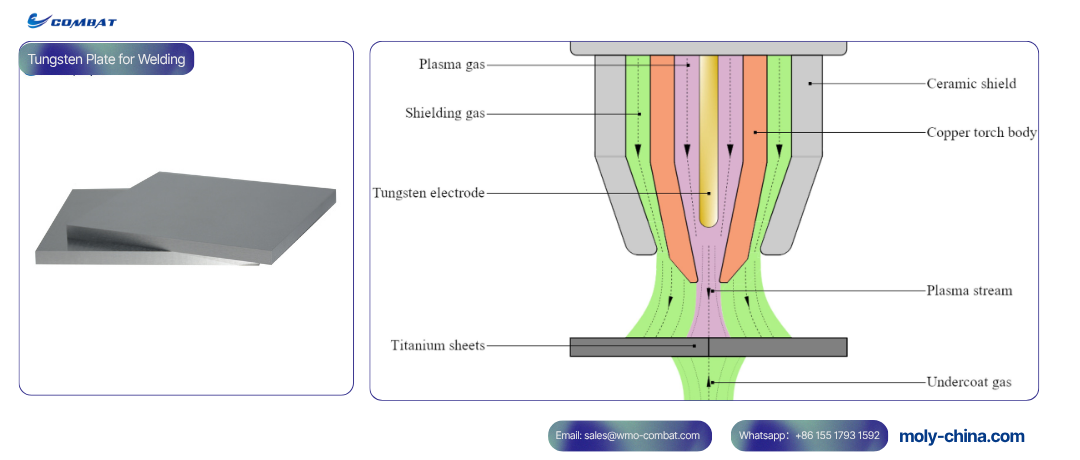
Benefit 1: Ultimate high temperature resistance
Tungsten metal has the highest melting point among all industrial metals, with a melting point range of 3410-3422℃, far exceeding the arc core temperature of TIG and plasma welding. The core temperature of conventional welding arc can reach 5000-6000℃, and ordinary copper and steel fittings will be rapidly softened, ablated and deformed.
Tungsten plate in the long term high temperature arc radiation and thermal shock, there will be no melting, collapse, deformation and other issues, always maintain structural integrity. At the same time, tungsten plate has very low high temperature vapor pressure, high temperature environment will not produce metal volatiles, which can effectively avoid the welding seam impurities, to protect the purity of the welding seam.
In actual welding production, tungsten plate is often made into arc protection baffle, high-temperature insulation liner, electrode support base, weld backing pad and other accessories. In vacuum welding, inert gas shielded welding and other high-end processes, tungsten plate's advantage of high temperature resistance is more prominent.
Relying on the excellent high-temperature thermal stability, the service life of tungsten plate accessories is much longer than that of traditional materials, which can effectively reduce the frequency of tooling replacement, avoid interruption of welding due to high-temperature failure of accessories, and ensure the continuous and stable operation of welding operations.
Benefit 2: Stable arc output
The welding quality of TIG and plasma welding depends on the stability of the arc and the precise control of heat input. Tungsten plate has excellent electrical and thermal conductivity, and with the appropriate tungsten alloy material, it can reduce the electron escape work and help the welding equipment to start the arc quickly.
When tungsten plate is used to make tooling and support accessories, the welding arc will not drift, flicker, arc breakage, etc. Whether it is DC welding steel, titanium alloy, or AC welding aluminum alloy, it can keep the arc focused and output stable.
At the same time, the tungsten plate can quickly and evenly conduct the welding heat, which can not only avoid the electrode and tooling local overheating burns, but also accurately control the cooling speed of the molten pool. By optimizing the metallurgical environment of the molten pool, it effectively reduces common defects such as weld porosity, slag entrapment and spatter.
In the precision welding of thin plates and fine welding of shaped parts, the thermal regulation advantage of tungsten plate is especially obvious. It can effectively avoid the problem of weld cracking caused by localized overheating and burning through and large temperature difference between hot and cold, and greatly improve the precision and appearance quality of the finished welding products.
Benefit 3: super wear-resistant, anti-arc erosion
In the industrial batch welding production, the fittings need to withstand arc erosion, high temperature oxidation, slag adhesion and mechanical friction repeatedly, and the traditional copper fittings are very susceptible to abrasion, adhesion, deformation, and need to be polished and replaced frequently.
Tungsten plate maintains ultra-high hardness in both normal and high temperature environments, with excellent resistance to arc erosion, thermal abrasion and slag adhesion. Even under high-current, high-frequency plasma welding conditions, there will be no problems such as Mushroom deformation, surface peeling, material peeling and so on.
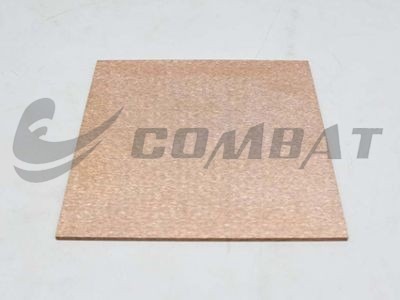
Copper tungsten composite plate combines the wear-resistant and high temperature characteristics of tungsten with the high thermal conductivity of copper, which is specially adapted to the severe working conditions of resistance welding and high-current plasma welding, and it can withstand long-term high-pressure, high-heat cyclic impact.
For automotive parts, electronic precision parts and other large-scale welding production lines, tungsten plate tooling can significantly reduce equipment downtime and maintenance time, reduce the operation and maintenance costs of manual grinding and parts replacement, and significantly improve the overall production efficiency.
Benefit 4: Ultra-low coefficient of thermal expansion
Welding deformation is the core pain point of precision welding. Metal plates are very prone to thermal expansion and contraction during the thermal cycle of rapid warming and cooling, which leads to workpiece misalignment, warping, and dimensional deviation, and significantly reduces the product qualification rate.
Tungsten plate has an extremely low coefficient of thermal expansion of only 4.5 × 10-⁶ / ℃, which is one of the materials with the best dimensional thermal stability among industrial metals. Under severe thermal cycling conditions, tungsten plate fixtures hardly deform.
Welding fixtures, positioning fixtures, and weld pads made of tungsten plate can always maintain accurate flatness and positioning accuracy, firmly fixing the position of the workpiece and eliminating the problem of workpiece deviation and misalignment during the welding process.
This advantage is crucial in welding thin-walled workpieces, precision shaped parts, and high-end aerospace components. Welding deformation can be minimized, without the need to follow a large number of orthopedic, grinding process, effectively improve the welding yield rate.
Benefit 5: Lower cost
From the point of view of procurement unit price, the initial investment cost of tungsten plate is higher than that of ordinary steel plate and copper plate, which is the primary concern of many enterprises. However, from the long-term production and full life cycle costing, tungsten plate has a significant economic advantage.
The service life of tungsten plate fittings is dozens of times that of traditional copper and steel fittings, which significantly reduces the frequency of fittings purchasing and inventory pressure. At the same time, it can reduce the loss of production capacity due to the failure of fittings and equipment downtime, and avoid the cost of scrap caused by bad welding in a batch.
Stable welding performance can greatly reduce the weld rework, workpiece shaping, surface grinding and other subsequent processes, saving a lot of labor and time costs. Especially in automated, high-capacity welding production lines, the effect of cost reduction and efficiency is more intuitive.
For long-term stable production of precision welding enterprises, tungsten plate can effectively reduce equipment operation and maintenance, capacity loss, product obsolescence of the three core invisible costs, the overall return on investment is much higher than the traditional welding consumables.
Application of Tungsten Plate in TIG/Plasma Welding
In the whole set of welding process system of TIG welding and plasma arc welding, tungsten plate does not belong to the welding consumables such as welding rods and wires, which are directly melted. It is precision-processed into various auxiliary tools and core protection accessories by virtue of its unique resistance to high temperature, deformation and arc erosion.
These accessories can provide stable environmental support for high-temperature, high-precision, automated welding conditions, solving the industry's problems of easy damage to traditional tooling, poor welding accuracy, and many defects in the finished product. At present, the core application scenarios of tungsten plate are mainly divided into four categories, covering most of the high-end working conditions of precision welding.
Welding seam backing pads and root support pads
Welding seam backing pad is the most popular application of tungsten plate in TIG and plasma welding, which is widely used in thin plate splicing, pipeline butt jointing, all-position welding of precision components and other processes. During construction, a flat tungsten plate after finishing is laminated to the back of the weld seam as an exclusive support substrate for the molten pool.
During the welding process, the metal in the molten pool is in a high temperature molten flow state, and the traditional copper pads are prone to softening and sticking to the solder due to the high temperature, resulting in depression, slagging and copper sticking defects at the root of the weld seam. The high-temperature strength of tungsten plate can hold the molten metal steadily, completely eliminating the problem of welding burn-through of thin plates and thin-walled pipes.
At the same time, the uniform heat dissipation property of tungsten plate can take away the residual heat of the weld at an even speed, standardize the molding form of the root of the weld, and make the root of the weld flat and full, and molding uniformity. The program is especially suitable for stainless steel, titanium alloy, aluminum alloy, nickel-based alloys and other difficult to weld materials, precision pipe welding, thin plate butt process, is the standard auxiliary materials for high-end pipe welding, pressure vessel welding.
High-temperature welding fixtures and precision positioning fixtures
Batch industrialized welding production requires high positioning accuracy of workpieces and consistency of fixtures. Common steel and aluminum fixtures will continue to suffer from thermal deformation, loosening, and positioning deviation under repeated thermal cycling, leading to excessive dimensional deviation of batch products.
Using tungsten plate's excellent low-temperature expansion and high rigidity characteristics, it can be made into various kinds of shaped positioning fixtures, compression brackets and fixed fixtures through precision machining. Even if the workpiece is exposed to high-temperature radiation and alternating hot and cold conditions for a long period of time, the overall dimensions, flatness, and positioning reference of the workpiece will not change.
Stable positioning effect can ensure that the welding position, weld length and depth of fusion of each workpiece are consistent, which greatly improves the welding consistency of batch products. It is very suitable for the automated batch TIG welding production of new energy automobile parts, precision hardware and aviation small parts.
High-temperature protection and wear-resistant accessories for plasma welding
The arc energy of plasma arc welding is highly concentrated, and the arc temperature and scrubbing intensity are much higher than that of conventional TIG welding, which requires more stringent requirements for high temperature, scrubbing and abrasion-resistant performance of the equipment protection fittings. Ordinary metal fittings are very easy to quickly erosion, skinning, breakage.
In the high-current small-hole plasma welding process, tungsten plates can be processed into arc shielding baffles, wear-resistant bushings inside the welding torch, high-temperature heat shielding baffles, molten pool protective lining, and other core accessories. It can continuously resist the high-speed scouring of high-intensity plasma arc and high-temperature oxidation erosion.
This kind of tungsten protective accessories can effectively isolate the high temperature arc from the copper structure of the welding torch and the precision components of the equipment, avoiding high temperature damage to the equipment, carbon adhesion and other problems, greatly extending the service life of the core components of the plasma welding equipment and reducing the failure rate of the equipment.
Auxiliary structural parts for automated welding torch
With the upgrading of welding automation and intelligence, industrial robotic TIG welding and plasma welding equipment have put forward higher requirements for the stability and durability of welding torch accessories. Thick high-precision tungsten plates can be refined, polished and annealed to make various types of welding torch accessories.
Common accessories include electrode holder, arc deflector support seat, welding torch tail heat shield, precision positioning base, etc. These accessories are based on the tungsten plate's high resistance to heat, which makes the welding torch more stable and durable. These accessories rely on the tungsten plate's advantages of high temperature resistance, no deformation, no abrasion, and can be adapted to continuous, high-frequency automated welding operations for a long time.
It can not only avoid electrode shift and arc instability caused by high temperature deformation of welding torch accessories, but also reduce the frequency of frequent shutdowns to replace the accessories, so as to ensure the continuous and stable operation of the automated production line, and effectively improve the overall welding capacity.
Welding tungsten plate selection guide
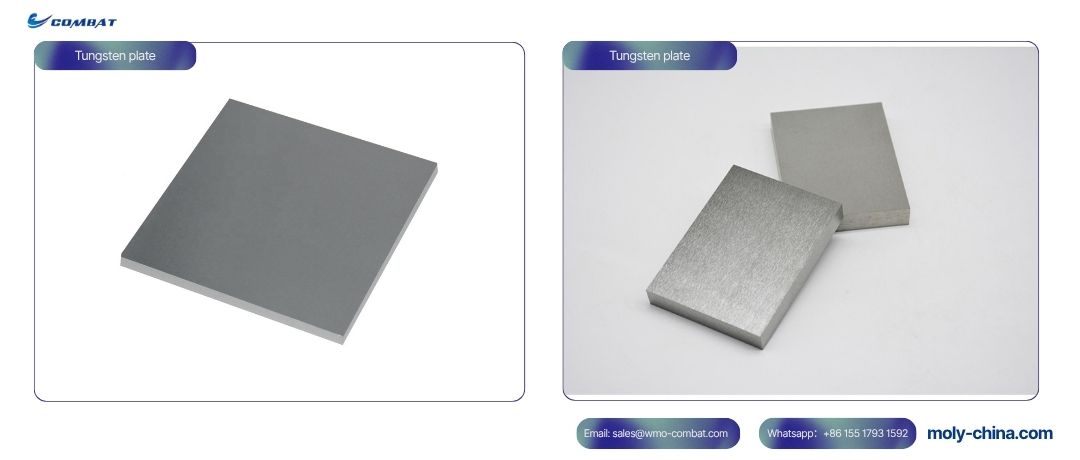
Tungsten plates are categorized into various material grades, thickness specifications and surface process types, with huge differences in different parameters corresponding to suitable working conditions, usage effects and purchasing costs. Blindly selecting tungsten plates will easily lead to the problems of excessive performance and cost waste, or insufficient performance and frequent damage.
Combining the process characteristics of TIG welding and plasma welding, welding materials and production frequency, accurate selection of tungsten plates from four dimensions of material, thickness, surface technology and quality procurement can maximize the performance of tungsten plates, strictly control the production cost and improve the stability of welding process.
1. Tungsten plate grade selection
High purity tungsten plate (purity ≥99.95%, in accordance with ASTM B760) is the material of choice for advanced precision welding. This material has the highest melting point, extreme purity, no impurity precipitation, high temperature stability, and will not produce metal volatiles to contaminate the weld seam under high temperature.
It is specially adapted to the vacuum welding, high purity inert gas shielded welding, aviation and nuclear power high-end precision weld backing pads and other harsh conditions, suitable for titanium alloys, nickel-based alloys, high purity stainless steel and other high-end materials welding processing, can be 100% to ensure the purity of the weld seam and molding accuracy.
Tungsten-based heavy alloy plate is based on tungsten, with the addition of nickel-iron and nickel-copper alloy components to optimize the performance, and the biggest advantage is excellent machinability, better toughness, and less prone to cracking. Compared with pure tungsten plate, it solves the pain point of high brittleness at room temperature and difficult to process shaped structure.
The material is suitable for the regular high temperature working conditions below 1450℃, suitable for the production of complex structure of the shaped welding fixture, positioning jigs, taking into account the stability and practicality of the processing, mostly used in general industrial precision welding scenarios.
Copper tungsten composite plate combines the high temperature and wear resistance of tungsten with the high thermal and electrical conductivity of copper, with balanced performance and no shortcomings. Resistant to arc erosion, fast heat dissipation, not easy to adhere to the slag, perfectly adapted to high-current plasma welding, high-frequency resistance welding conditions.
In high volume and high frequency automated welding production line, the durability of copper tungsten composite plate is far more than that of pure copper parts, which is a cost-effective choice for industrial scale welding.
2. Tungsten Plate Thickness
0.5-3mm thin tungsten plate is lightweight, moderately flexible, easy to cut and process, and will not cause heavy deformation to small workpieces. They are mainly used for small precision welding fixtures, miniature workpiece positioning support, and ultra-thin plate auxiliary welding scenarios.
This kind of thin plate is suitable for low-current precision TIG welding, which can accurately control the temperature and assist in shaping to meet the high-precision welding needs of miniature electronic components and small precision hardware parts.
3-12mm standard thickness tungsten plate is the mainstream industrial specifications, suitable for most of the conventional TIG welding, medium-current plasma welding conditions. It is commonly used to make general welding seam backing pads, standard welding fixtures, and general heat shielding plates.
The thickness range takes into account the heat dissipation performance, structural stability and cost-effective, suitable for stainless steel, ordinary aluminum alloy, carbon steel and other conventional materials, plate, pipe welding, versatility is very strong.
Thickened tungsten plate above 12mm has a large heat capacity, strong structural stability, heat dissipation, impact resistance, deformation resistance ability to pull full. It is specially adapted to heavy welding conditions such as thick plate welding, high-current continuous plasma welding, and long-time high-temperature operation.
It can effectively resist continuous high-temperature thermal shock, avoid overheating failure of the workpiece, and ensure the stability of heavy components, pressure vessels, and thick-walled pipeline welding.
3. Surface technology selection
The surface of tungsten plate is smooth, burr-free, oxidation-free and with very low porosity after precision polishing and grinding. It is not easy to stick welding slag and spatter particles during the welding process, and will not precipitate impurities to pollute the weld.
It can always keep the surface clean and smooth, and does not require frequent grinding and cleaning for long-term use. It is the exclusive choice for high-precision and high-cleanliness welding scenarios, and is suitable for medical, semiconductor, aerospace, and other high-demanding processes.
The annealed tungsten plate has gone through the high-temperature stress relief process, eliminating the internal processing stresses of the plate and greatly improving its toughness, which effectively solves the problems of high brittleness at room temperature and easy cracking in machining of pure tungsten plate.
The tungsten plate of this process is suitable for customized processing of shaped, curved, complex structure welding fixtures, taking into account the structural strength and processing plasticity, to meet the demand for customized non-standard fixtures.
4. Procurement and quality selection
Welding conditions require high purity, dimensional accuracy and flatness of tungsten plates. Poor quality tungsten plates have problems such as substandard purity, large dimensional deviation, and serious surface oxidation, which are very likely to cause contamination of weld seams, failure of tooling positioning, and early breakage.
When purchasing, we need to prioritize the products that meet the international industry standards of ASTM B760 and ASTM B777, and require the suppliers to provide complete material testing certificates, purity reports, dimensional testing reports, and strictly verify the tungsten content, flatness, thickness tolerance and other core parameters.
At the same time, it is necessary to combine the actual working conditions with their own selection, according to the welding material, working current, operating environment, production frequency to match the corresponding materials and specifications, not only to avoid the rapid loss of accessories caused by the use of small materials, but also to avoid the waste of tungsten plate costs.
Frequently Asked Questions of Tungsten Plate
Q1: What is the core difference between tungsten plate and tungsten rod in welding?
Tungsten rod is the core consumable of TIG welding, which is used as a non-melting electrode to generate arc directly and complete the welding. Tungsten plate is an auxiliary tooling material, not involved in arc forming, mainly used for pads, fixtures, insulation, support and other scenarios, to provide stable working conditions for the welding process.
Q2: Is it better to choose pure tungsten plate or copper-tungsten composite plate for TIG welding pad?
High-end precision welding, vacuum high-temperature welding, easy to contaminate the workpiece welding, prioritize the use of high-purity tungsten plate, higher purity, no impurity pollution, high temperature resistance performance is stronger. Conventional high-current, high-frequency mass production conditions, can choose copper-tungsten composite plate, faster heat dissipation, more cost-effective, more wear-resistant.
Q3:Why is tungsten plate more suitable for plasma welding than copper plate?
Copper plate has low melting point and high thermal expansion coefficient, which is easy to soften and deform, stick slag and wear out quickly under the high temperature arc of plasma welding, and need to be replaced frequently. Tungsten plate is resistant to high temperature, zero deformation and erosion, and can be operated stably for a long period of time, which greatly reduces the cost of downtime and maintenance, and is suitable for severe plasma welding conditions.
Q4: Can tungsten plates be used for TIG welding of thin-walled aluminum alloys?
Yes, it can be used for TIG welding of thin-walled aluminum alloy. Thin-walled aluminum alloy welding is very prone to burn-through and deformation problems. Using tungsten plate as the backing plate can stably support the molten pool, equalize heat dissipation, inhibit deformation, and at the same time will not contaminate the aluminum alloy weld seam, which is the preferred auxiliary material for precision welding of thin-walled aluminum parts.
Conclusion
Tungsten plate perfectly solves the various pain points of traditional welding consumables by virtue of its extreme high temperature resistance, stable arc control ability, super wear-resistant and anti-erosion characteristics, excellent dimensional stability and long-term cost advantages.
In the TIG and plasma welding scenarios with strict precision requirements, high production frequency and complex working conditions, tungsten plate is a high-performance upgrade program to replace copper and steel. It can not only comprehensively improve the quality of weld seam and product yield, but also realize long-term cost reduction and efficiency.