

Molybdenum Wire: Characteristics, Types and Applications
作者:kangbote 时间:2026-04-02 09:05:57
As a high-performance refractory metal, molybdenum wire is the unsung hero behind precision manufacturing, aerospace innovation and the development of the electronics industry. It plays an irreplaceable role in several industrial sectors due to its unique physical and mechanical properties. Combat Refractory Materials will disassemble molybdenum wire in detail for core properties, common types and diverse applications.
What is molybdenum wire?
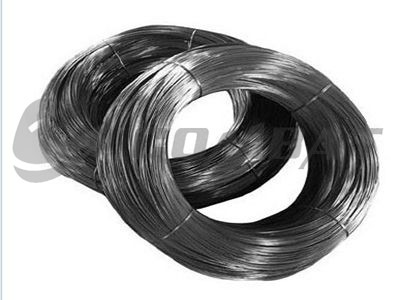
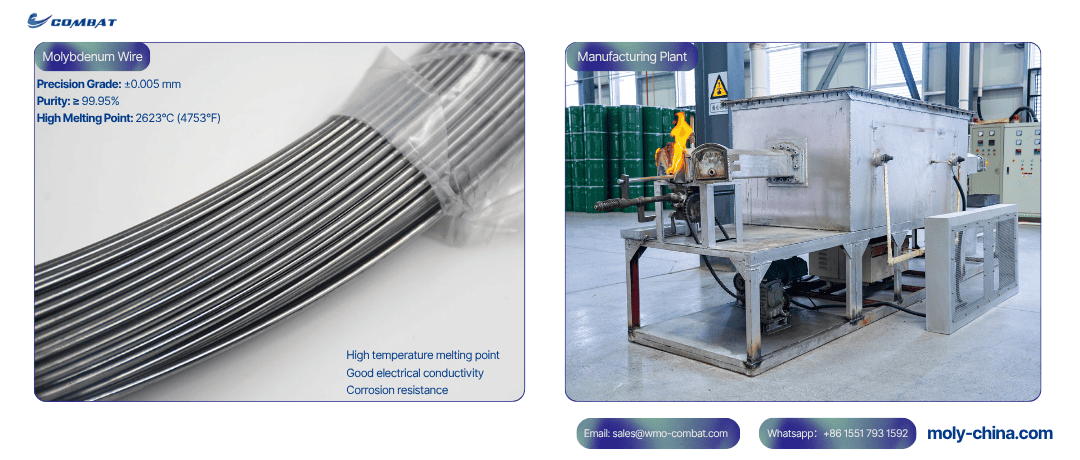
Molybdenum wire is a thin, silvery-white metal wire made from molybdenum. Molybdenum material is a refractory metal with excellent thermal and mechanical properties.
Molybdenum wire first appeared in the early 20th century and was initially used mainly as a lead for incandescent lamps. With the continuous advancement of industrial technology, the characteristics of molybdenum wire have been further explored and gradually expanded to many fields such as electronics, aerospace, and mechanical processing.
The advantages of molybdenum wire are its versatility, durability, and stability in extreme environments. Whether it is high temperature, high pressure or complex chemical environment, molybdenum wire can maintain good performance, which is also its core competitiveness that distinguishes it from other metal wires.
Core properties of molybdenum wire
Physical and mechanical properties
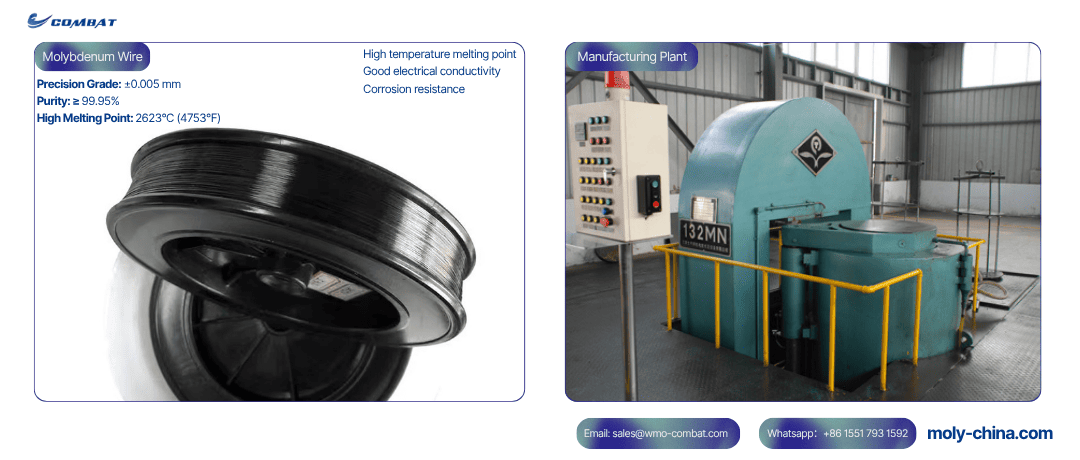
High temperature melting point: about 2623 ℃(4753℉), this characteristic enables it to adapt to high temperature working conditions and is an ideal material for high temperature field applications.
Density: 10.28g/cm³. This molybdenum wire density can meet the structural strength requirements without excessively increasing the weight of equipment or components, and is suitable for weight-sensitive fields such as aerospace and electronics.
Electrical conductivity and thermal conductivity: The electrical conductivity is 5.7×10^6 S/m, and the thermal conductivity is 138W/(m·K). Its good electrical and thermal conductivity makes it outstanding in electronics and heat dissipation related applications.
Diameter range: 0.02mm to 0.2mm molybdenum wire. Its slender size enables it to be used for high-precision and detailed processing work, suitable for precision manufacturing scenarios.
Unique advantages of molybdenum wire
High strength at high temperatures: High temperature molybdenum wire can maintain hardness and structural integrity, which is crucial to industries such as aerospace and heat treatment.
Low thermal expansion and high creep resistance: can effectively reduce deformation caused by temperature fluctuations and ensure the stability and service life of components.
Corrosion resistance and low vapor pressure: Molybdenum wire is not easy to corrode and has a low vapor pressure, which can maintain stable performance for a long time and extend the service cycle.
Toughness and flexibility: It can reduce the risk of breakage during continuous operation. High-strength molybdenum wire is particularly suitable for precision cutting.
Common industrial types of molybdenum wire
Classification by surface color
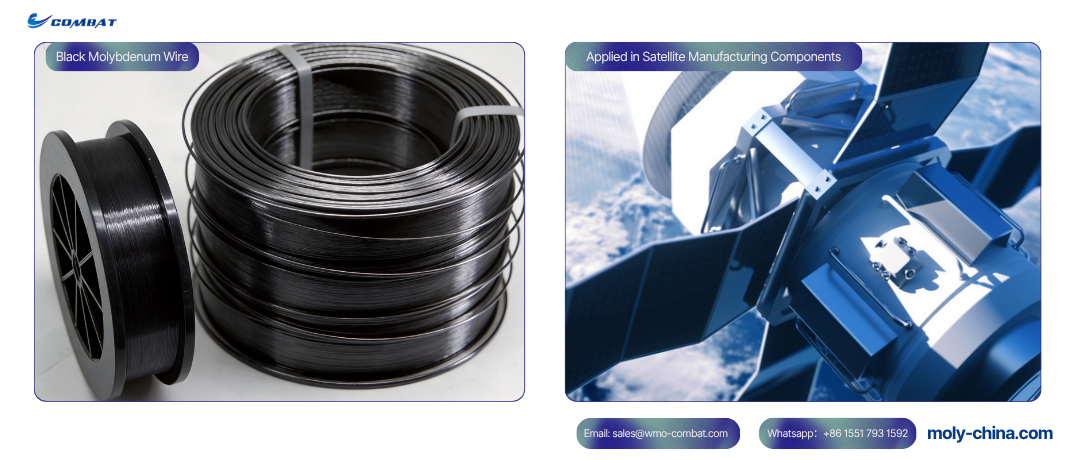
- Black molybdenum wire
Black molybdenum wire is mainly used in core wire, cutting wire, hook, side plate, pin, grid wire and other components that require elongation.
- White molybdenum wire
White molybdenum wire is mainly used in the electric vacuum and electric light source industries, and can be used as core wire, molybdenum needle, bracket, pin and other components.
Classification by purity and composition
- Pure molybdenum wire
The molybdenum purity of pure molybdenum wire≥99.95%, which is suitable for sensitive application scenarios with high material purity requirements. Its advantages are stable performance, no impurity interference, and can ensure the reliability and consistency of components.
- Alloy molybdenum wire
Alloy molybdenum wire adds a small amount of alloying elements to molybdenum, such as titanium (Ti), zirconium (Zr), lanthanum (La), etc. Common types include molybdenum-titanium alloy wire, molybdenum-zirconium alloy wire, molybdenum-lanthanum alloy wire (lanthanum-molybdenum wire), etc.
The purpose of adding alloying elements is to improve the specific properties of molybdenum wire, such as increasing strength and stability, so that it can be adapted to more complex and severe industrial working conditions.
- Coated molybdenum wire
The surface of the coated molybdenum wire will be covered with a layer of special materials, such as molybdenum disilicide (MoSi2), aluminum, etc. The main function of the coating is to improve the oxidation resistance of molybdenum wire or to customize molybdenum wire according to application needs.
Wire cutting special molybdenum wire
Wire cutting special molybdenum wire is a special molybdenum wire customized for cutting scenarios, with core features such as high strength, good discharge performance, high surface finish, fast cutting speed and long service life. This high-strength molybdenum wire is used to cut various non-ferrous metals, steel and magnetic materials. It is the core material for precision cutting in the manufacturing and CNC processing industries.
Molybdenum Wire Manufacturing Process
The manufacturing process of molybdenum wire directly affects its performance. Molybdenum wire produced by different processes has differences in accuracy, strength, stability, etc., which is also the focus of attention during the procurement and use process.
At present, there are three main manufacturing methods for molybdenum wire, each with its own advantages and disadvantages, which are suitable for different application needs.
Pulling method (most common method)
Drawing is currently the most commonly used method for producing molybdenum wire. The core process is to draw the molybdenum rod through a series of molds and gradually process it into thin molybdenum wire.
The advantages of this method are high precision and strong scalability, and it can mass-produce molybdenum wires of different diameters.
Extrusion method (less commonly used but important)
The core of the extrusion method is to extrude the molybdenum material through a die, which is suitable for manufacturing molybdenum wire or molybdenum products with complex shapes.
Its advantage is high production efficiency and the ability to quickly manufacture products with complex geometries.
Chemical vapour deposition (advanced methods)
Chemical vapor deposition is a relatively advanced manufacturing method that can accurately control the performance of molybdenum wire and produce high-quality molybdenum wire.
The advantage of this method is that the product quality is high and the performance is stable, but the cost is high. Therefore, it is mainly used in special application scenarios with extremely high requirements on molybdenum wire performance, and the application range is relatively limited.
As a leading molybdenum wire manufacturer in China, Combat Metal supplies high-quality molybdenum wire to all parts of the world.
Wide application of molybdenum wire in modern industry
Application of molybdenum wire in electric spark machining (EDM)
In EDM, high-temperature resistant molybdenum wire can maintain a stable shape and tension, is not easy to break, can obtain cleaner cuts and tighter tolerances, and is particularly suitable for processing materials with higher hardness such as titanium alloy and tool steel. At the same time, high temperature resistant molybdenum wire can shorten the cutting cycle and improve processing efficiency.
Application of molybdenum wire in aerospace industry
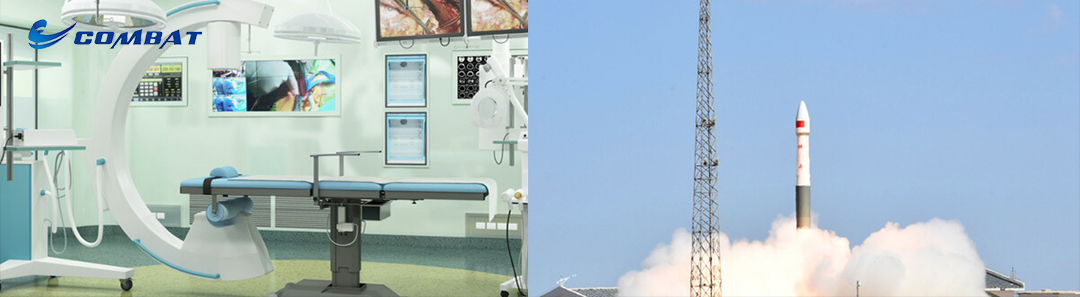
Molybdenum wire used in aerospace can manufacture components such as fasteners, electrical contacts, and heat shields. These components need to remain structurally intact in extreme temperature fluctuations and complex chemical environments, and the properties of molybdenum wire are just right to meet this need.
According to industry reports, demand for molybdenum wire in the aerospace sector is growing at an annual rate of 4%, which shows that the aerospace industry is focusing on lightweighting, high-durability materials is increasing.
Application of molybdenum wire in electronics and semiconductor industries
The electronics and semiconductor industries place extremely high demands on the precision, stability and conductivity of materials.
Molybdenum wire is mainly used in the production of semiconductors and integrated circuits. It can also be used as an electronic component such as the core shaft, tube seat, and gate of tungsten wire. Its high melting point and stability can ensure that no deformation or damage occurs during the operation of electronic equipment, extending the service life of the equipment.
In addition, molybdenum wire can also be used as a sputtering target material in the production of high-tech products such as solar cells and flat-panel displays, which can achieve uniform deposition of thin films and ensure product accuracy and quality.
Application of molybdenum wire in lighting industry
The lighting industry was one of the earliest applications of molybdenum wire and still plays an important role today. Molybdenum wire is often used to manufacture filaments for high-intensity gas discharge lamps and incandescent lamps due to its high temperature resistance.
In high-temperature working environments, molybdenum wire can maintain stable performance, effectively extend the service life of lighting products, and reduce replacement costs. It is an indispensable core material in the lighting industry.
Other key applications of molybdenum wire
Molybdenum wire in additive manufacturing (3D printing)
In additive manufacturing fields such as 3D printing, molybdenum wire can improve the accuracy and quality of printed parts due to its high melting point and excellent thermal conductivity. Especially in metal 3 D printing, molybdenum wire can be used as a printing material to manufacture complex components that are resistant to high temperatures and high strength.
Molybdenum wire in the medical industry
The application of molybdenum wire in the medical field mainly focuses on the fields of minimally invasive surgery and radiation protection. It can be used as a guide wire for minimally invasive surgery. With its slender, flexible and corrosion-resistant properties, it reduces surgical trauma. At the same time, molybdenum wire can also be used for radiation protection of X-ray equipment to ensure the safety of medical equipment.
In addition, molybdenum wire can also be used to manufacture medical equipment such as catheters and surgical tools. Its biocompatibility and corrosion resistance can ensure the safety and reliability of medical equipment.
Molybdenum wire in the heat treatment industry
In the heat treatment industry, molybdenum wire is mainly used in high-temperature vacuum furnaces and hydrogen atmosphere furnaces. Its high temperature and corrosion resistance can adapt to the extreme environment during the heat treatment process, ensuring the smooth progress of heat treatment work while extending the service life of the equipment.
Molybdenum wire in the glass manufacturing industry
Molybdenum wire is mainly used in the glass manufacturing industry for sealing glass and metal. Its thermal expansion coefficient is highly matched with glass, which can achieve a tight seal between glass and metal, improve the sealing and stability of glass products, and is widely used in the manufacture of glassware, optical glass and other products.
Key Considerations for Choosing Molybdenum Wire
Type matches application scenario
When selecting molybdenum wire, the appropriate type must first be determined according to the specific application scenario. For example, precision wire cutting should select wire cutting-specific molybdenum wire; the electric vacuum and light source industries are suitable for selecting white molybdenum wire; and alloy molybdenum wire can be selected for high temperature and high strength demand scenarios.
Purity and composition requirements
Different industries have different purity requirements for molybdenum wire. Sensitive fields such as electronics and semiconductors need to choose pure molybdenum wire with a purity of ≥99.95%; if strength and stability need to be improved, alloy molybdenum wire with added elements such as titanium and zirconium can be selected.
Diameter and tolerance control
The diameter of molybdenum wire ranges from 0.02 mm to 0.2 mm, and the appropriate diameter and tolerance must be determined according to the processing accuracy requirements when selecting. For example, precision machining scenarios require the selection of molybdenum wires with small diameters and strict tolerance ranges to ensure machining accuracy.
Impact of manufacturing processes
The properties of molybdenum wire produced by different manufacturing processes vary. For scenarios with mass production and moderate precision requirements, the drawing method can be used to select the molybdenum wire produced; for complex shapes and special performance requirements, the extrusion method or chemical vapor deposition method can be used to consider the molybdenum wire produced.
Frequently Asked Questions of molybdenum wire
Q: What is the core difference between black molybdenum wire and white molybdenum wire?
A1: The core difference lies in the surface characteristics and application scenarios. Black molybdenum wire has a good extension rate and is suitable for basic components such as core wire and cutting wire; white molybdenum wire has high purity and adaptability and is suitable for high-precision fields such as electric vacuum and electric light source.
Q: Can molybdenum wire be used in high temperature furnace?
A2: Yes. Molybdenum wire has a melting point of up to 2623℃ and has excellent high temperature resistance. It is widely used in high temperature vacuum furnaces, hydrogen atmosphere furnaces and other heat treatment equipment.
Q: Is alloy molybdenum wire better than pure molybdenum wire?
A3: There is no absolute superiority or inferiority, it needs to be selected according to application needs. Pure molybdenum wire has high purity and stable performance, making it suitable for sensitive scenarios; alloy molybdenum wire has specific properties enhanced by adding elements, making it suitable for more severe working conditions.
Q: Molybdenum vs Tungsten Wire: Key Differences?
A: Tungsten wire has a higher melting point (3422°C) for extreme heat (aerospace, semiconductors). Molybdenum wire (2623°C) features better ductility, perfect for LED and heating applications.
Conclusion
Molybdenum wire plays a key role in many industries such as precision manufacturing, aerospace, electronics, and medical care.
If you are looking for high-quality molybdenum wire for industrial applications, or need to customize appropriate molybdenum wire products according to specific scenarios, you can always contact us Combat for professional molybdenum wire supply solutions and product recommendations.