

Molybdenum Plate Grades: Mo1, Mo2 and TZM Compared
作者:kangbote 时间:2026-09-30 16:31:33
Molybdenum plate is an indispensable core special material for high-end high-temperature industry, vacuum equipment, semiconductors and aerospace. At present, the commercial molybdenum plate on the market is mainly divided into two categories, Mo1, Mo2 pure molybdenum, and TZM titanium zirconium molybdenum alloy plate, the three grades of basic properties are similar, but in the purity, high temperature strength, creep resistance, cost and application of the scene is very different. This article will compare the composition, performance, process, price and application scenarios of Mo1, Mo2 and TZM molybdenum alloy plates.
What Are Molybdenum Plate Grades?
The molybdenum plate grade is the core basis for distinguishing the performance grade of molybdenum material and adapting to different industrial scenarios. The market mainstream commercial moly plate is divided into pure moly plate and molybdenum alloy plate two categories, of which pure molybdenum to Mo1, Mo2 as the representative, alloy class to TZM as the core application category.
In the industry general definition, molybdenum plate and molybdenum sheet have a clear thickness division standard. According to ASTM B386 specification, the thickness over 4.8mm(0.1875 inches) is defined as molybdenum plate, and the thickness below this value is classified as molybdenum sheet and molybdenum foil. This standard is also the general supply specification basis for domestic and foreign suppliers.
The current industry common implementation standards include ASTM B386 International Standard the impurity content, mechanical properties and dimensional tolerances of Mo1, Mo2 and TZM are clearly defined, which is the core basis for industrial acceptance and material quality inspection.
What Is Mo1 High Purity Molybdenum Plate?
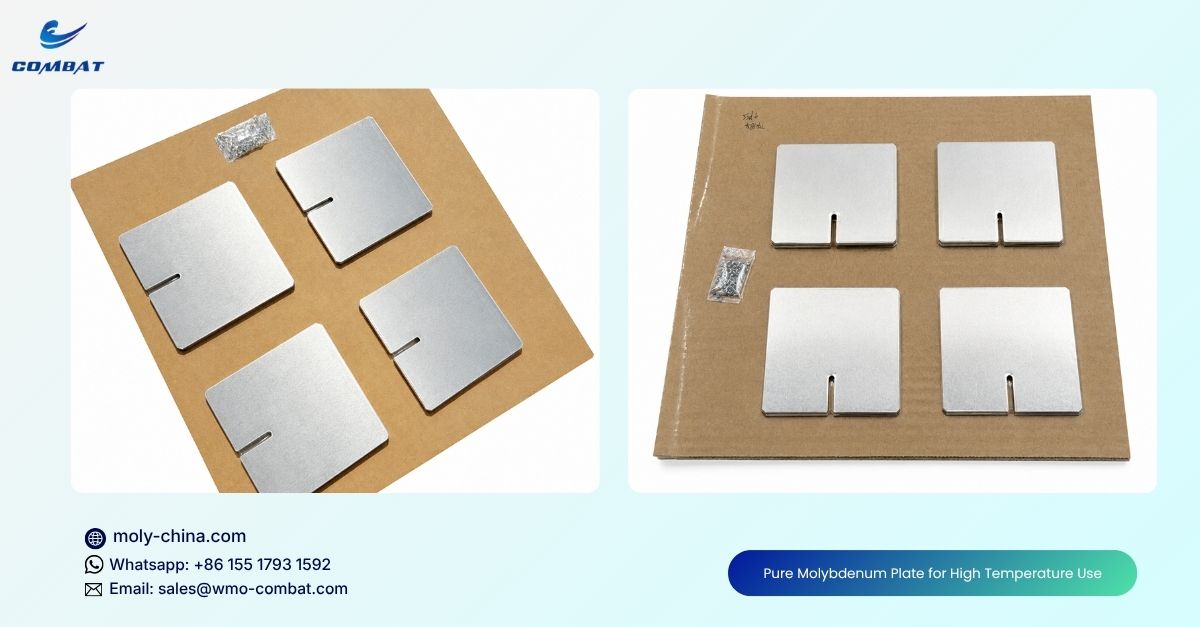
Mo1 moly plate is a high-end brand with the highest purity and the most stringent impurity control in commercial pure molybdenum plates, and is also the preferred molybdenum material in the high-end precision field. Its molybdenum content is 99.95%, and all impurity elements are in line with the industry's top control standards.
The core impurity control parameters are strictly controllable, including iron 0.005%, nickel 0.002%, aluminum 0.002%, silicon 0.003%, carbon 0.005%, oxygen, nitrogen and other gaseous impurities content is very low, from the root to eliminate the problem of impurity precipitation pollution.
The molybdenum plate advantage lies in ultra-low pollution risk with excellent thermal conductivity. It has uniform structure, high compactness and excellent processing performance, which can meet the requirements of precision milling, cutting, polishing and other high-precision processing.
In terms of standard correspondence, Mo1 molybdenum plate fully corresponds to ASTM B386 Type 361 standard, which is an international high-purity molybdenum grade, and its material stability is recognized by the global high-end manufacturing industry.
Due to its high purity and stable performance, the application of this plate mainly covers semiconductor equipment accessories, high vacuum cavity components, medical imaging equipment parts, optical precision components, high purity electrodes and laboratory scientific research equipment.
From the cost point of view, the price of Mo1 moly plate is higher than that of Mo2 pure moly plate and conventional alloy plate, which is more suitable for high-end scenes with rigid requirements on material purity and cleanliness, and is not recommended for ordinary industrial conditions to avoid cost waste.
What is Mo2 Molybdenum Plate?
Mo2 molybdenum plate also belongs to the commercial pure molybdenum material, is the industrial general grade pure molybdenum products, the core positioning is to replace Mo1 cost-effective selection. The molybdenum content is more than or equal to 99.90%, and the purity of Mo2 moly plate is slightly lower than that of Mo1.
Compared with Mo1,Mo2 appropriately relaxes the impurity content limit, iron, carbon, oxygen and other impurities allow a small increase in content, but still retains the core physical and chemical properties of pure molybdenum materials, will not affect the conventional high temperature performance.
Mo2 plate perfectly inherits the core advantages of pure molybdenum ultra-high melting point, low thermal expansion, good thermal conductivity, high temperature resistance, oxidation resistance, excellent thermal stability, fully adapted to conventional industrial high temperature conditions.
The biggest core highlight of the grade is outstanding cost performance. In scenarios without ultra-high purity requirements, Mo2 can completely replace Mo1, significantly reducing equipment manufacturing costs and consumable replacement costs.
Mo2 plate is used to make ordinary industrial high temperature furnace accessories, furnace body heat shield, industrial support structure, general machining blank, ordinary high temperature electrode, glass industry tooling and other conventional equipment components.
In the domestic and foreign supply system, Mo2 and Mo1 are matching pure molybdenum grades, which are the largest and most versatile pure molybdenum plates in the industrial market at present, and are suitable for most non-precision and non-high-purity high-temperature conditions.
What Is TZM Molybdenum Alloy Plate?
TZM molybdenum alloy plate is not pure molybdenum material, is a titanium-zirconium-carbon composite reinforced molybdenum alloy, is currently the most widely used in the field of high temperature and heavy load molybdenum alloy grades, completely make up for the lack of pure molybdenum high temperature strength of the short board.
The composition of TZM is molybdenum matrix +0.40~0.55% titanium +0.06~0.12% zirconium +0.01~0.04% carbon, which forms stable titanium carbide and zirconium carbide hard particles and refines the grain structure by doping with trace alloying elements.
Compared with Mo1 and Mo2 pure moly plate, the performance of TZM alloy is improved significantly. The recrystallization temperature is increased by about 250 ℃, which can reach 1400~1450 ℃, so as to avoid grain softening and structure collapse of molybdenum plate at high temperature.
In the high temperature and heavy load environment above 1300 ℃, the strength of TZM alloy is about 2 times that of pure molybdenum, and it has excellent creep resistance and heat fatigue resistance. It can work stably under high temperature stress environment for a long time, and is not easy to deform and crack.
The TZM plate corresponds to ASTM B 386 364 and ASTM F288 standards. It is a special material for aerospace, high-temperature molds, and high-end heat treatment equipment. Its performance stability has been verified under severe working conditions.
TZM molybdenum alloy plate is used for high-temperature and heavy-duty scenarios, including heavy-duty furnace fixtures, die-casting molds, forging hot-working molds, aerospace high-temperature structural parts, rocket nozzles, sapphire crystal growth equipment and other continuous load conditions at 1000~1700 ℃.
It should be noted that the hardness of TZM alloy is higher, the plasticity is slightly worse, the difficulty of forming and processing is higher than that of pure molybdenum plate, and the requirements for processing equipment and technology are higher. At the same time, the procurement cost of TZM alloy is also higher than that of Mo1 and Mo2 pure moly plate.
Parameter Comparison Of Mo1, Mo2 And TZM Molybdenum Plate
In order to quickly distinguish the core differences of the three grades, this section makes a systematic comparison from the material type, component purity, high temperature performance, use characteristics, cost, applicable scenarios and other multi-dimensional, covering the core reference indicators of selection.
- Material Type and Purity: Mo1 and Mo2 are made of pure molybdenum, the purity of the former is ≥ 99.95, and the impurity control is extremely strict. The purity of the latter is ≥ 99.90, and the impurity standard is moderately relaxed. TZM is a molybdenum-based alloy with a molybdenum content of about 99.2 percent, with the remainder being titanium, zirconium, and carbon strengthening elements.
- High temperature core performance: Mo1 and Mo2 performance is close, the recrystallization temperature is about 1000~1100 ℃, high temperature strength, creep resistance is medium. The recrystallization temperature of TZM is increased by more than 250 ℃, and the high temperature strength, creep resistance and heat fatigue resistance are far superior to pure molybdenum sheet.
- Processing and use characteristics: Two pure molybdenum plates have good plasticity, easy cutting, good formability and excellent thermal conductivity. TZM alloy has high strength and hardness, and is more difficult to process. Its thermal conductivity is slightly lower than that of pure molybdenum, but its high temperature structural stability is better than that of pure molybdenum.
- Cost and price/performance ratio: Price in order of TZM>Mo1>Mo2. Mo2 is the most cost-effective, suitable for general industrial scenarios, Mo1 for high-purity scenarios, TZM for high-end high-temperature heavy-duty scenarios, on-demand selection can maximize cost-effective.
- Standard and Adaptation Scenarios: Mo1 corresponds to ASTM 361 and is suitable for high-purity and precision scenes; Mo2 is suitable for general industrial high-temperature scenes; TZM corresponds to ASTM 364 and is suitable for extreme working conditions of high temperature, high pressure and heavy load.
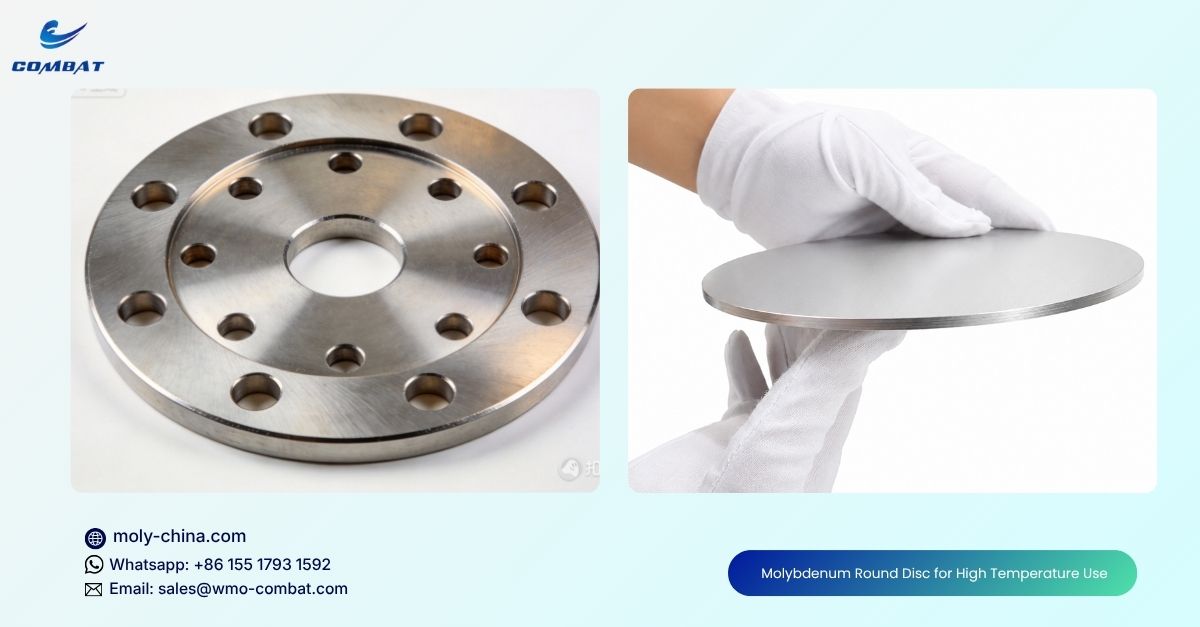
Pure Molybdenum vs. TZM Alloy: Which Performance Is Better at High Temperatures?
In the industrial high temperature environment of 1000~1700 ℃, the strength retention rate, deformation resistance and structural stability of the material are the core indicators to determine the life of the equipment, which is also the core gap between pure molybdenum plate and TZM alloy plate.
The short board of pure moly plate (Mo1/Mo2) is concentrated in the high temperature strength decay quickly. When the temperature exceeds 1100 ℃, pure molybdenum will gradually recrystallize and soften, and the tensile strength will be greatly reduced. Long-term stress is prone to bending, deformation, creep failure and other problems.
The TZM alloy through the carbide strengthening mechanism, fundamentally solve the high temperature of pure molybdenum short board. The uniformly distributed TiC and ZrC hard particles can pin the grain boundary, inhibit the grain growth and slip at high temperature, and greatly improve the structural stability.
The specific data difference is very intuitive: the strength difference between the three is small at room temperature; At 1000 ℃, the tensile strength of TZM is about 350MPa, which is far more than 180MPa of pure molybdenum. At 1300 ℃, the strength of TZM can reach 200MPa, which is more than twice that of pure molybdenum.
At the same time, TZM creep resistance, thermal fatigue performance is significantly better than pure molybdenum, can be long-term in alternating high temperature, continuous load conditions, stable operation, not easy to crack, deformation, failure and other problems.
But pure molybdenum plate is not completely replaced. In the semiconductor, high vacuum, optical and other high purity, cleanliness, thermal conductivity requirements of the scene, the non-alloy doped Mo1 high purity molybdenum plate, is still the TZM alloy can not replace the best choice.
|
Property |
Pure Molybdenum (Mo1/Mo2) |
TZM Alloy |
Winner at High Temp |
|
Recrystallization Temperature |
~1000–1100°C |
~1400–1450°C (~250°C higher) |
TZM |
|
Tensile Strength Retention |
Declays more sharply with rising temperature |
Significantly better retention |
TZM |
|
Strength Examples |
Room temp: ~550 MPa |
Room temp: 700–750 MPa |
TZM (often ~2× stronger above 1300°C) |
|
Creep Resistance |
Moderate |
Excellent (can be >10× better in some conditions) |
TZM |
|
Thermal Fatigue Resistance |
Moderate |
Better |
TZM |
|
Weldability at Elevated Temp |
Good |
Generally improved |
TZM |
|
Melting Point |
~2623°C |
Similar (~2620°C) |
Tie |
|
Thermal Conductivity |
Excellent |
Slightly lower but still very good |
Pure Mo |
|
Purity / Contamination Risk |
Highest (especially Mo1) |
Lower (alloy additions) |
Pure Mo |
How To Accurately Choose Mo1, Mo2, TZM Alloy?
Molybdenum plate selection does not need to blindly pursue high-end grades, the core follows three priorities: working condition purity requirements> high temperature temperature and load> procurement budget, combined with their own equipment scenarios can be quickly and accurately selected.
If your equipment belongs purity Sensitive Scenarios Mo1 molybdenum plate is preferred. Semiconductor equipment, high vacuum cavity, medical optical accessories, precision scientific research equipment and other scenarios, trace impurities will affect product accuracy and cleanliness, Mo1 ultra-high purity can completely avoid the risk of pollution.
If you need low Cost General Purpose High Temperature Materials Mo2 molybdenum plate is preferred. General industrial furnace heat shield, support structure, general processing blank, non-precision high temperature electrode and other scenarios, Mo2 performance is fully up to standard, and can effectively control the procurement cost.
If the equipment is high temperature and heavy load conditions, the TZM molybdenum alloy plate must be selected. TZM is the only type that can be used for long-term stable service when the working temperature exceeds 1100 ℃, the plate needs to continuously bear mechanical load, or there are hard requirements for deformation resistance and creep resistance.
|
Your Priority |
Recommended Grade |
Why |
|
Highest purity / lowest contamination (semiconductors, high-vacuum systems, optics, medical imaging, sensitive electronics) |
Mo1 |
≥99.95% pure Mo with the strictest impurity limits. Lowest risk of contamination. |
|
Cost-effective pure molybdenum for general high-temperature use (furnace parts, heat shields, structural components where ultra-high purity is not critical) |
Mo2 |
Still pure molybdenum (≥99.90%), good thermal properties, but more economical than Mo1. |
|
Best high-temperature strength, creep resistance, and load-bearing performance (high-load tooling, dies, aerospace components, furnace fixtures operating under stress at 1000–1700°C) |
TZM |
Alloy (Mo + Ti + Zr + C) offers significantly higher strength retention, higher recrystallization temperature (~250°C higher), and superior creep resistance compared with pure Mo. |
How Molybdenum Plate Is Manufactured ?
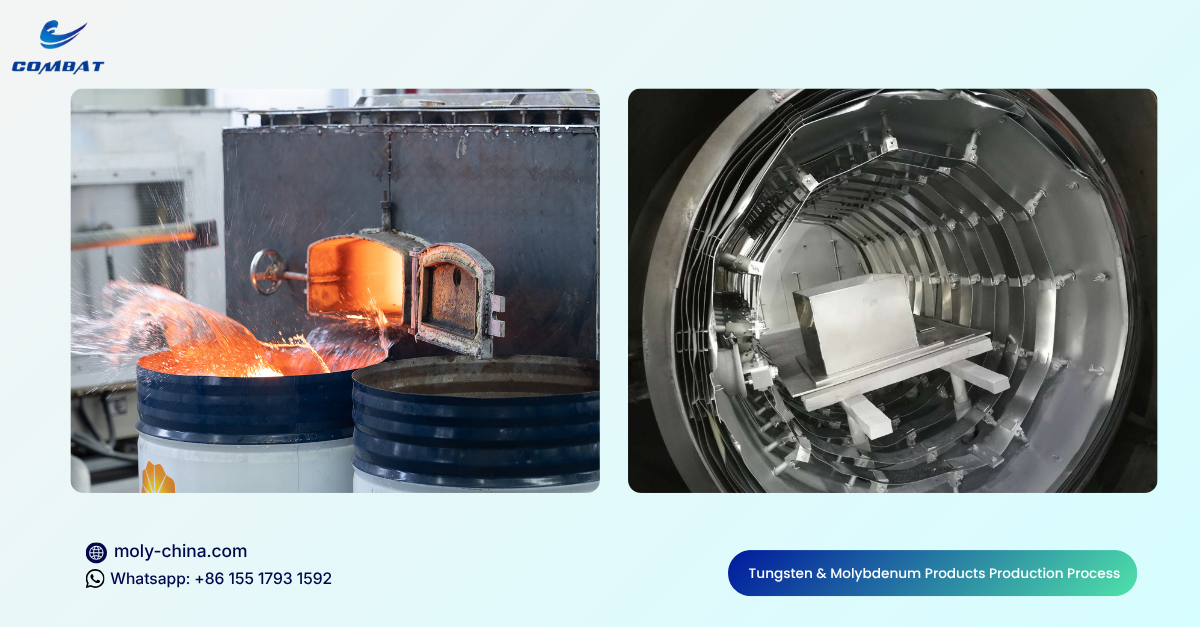
At present, the industrial mass production of Mo1, Mo2 pure molybdenum plate and TZM molybdenum alloy plate, unified use. powder metallurgy molding process manufacture. Compared with the traditional casting process, powder metallurgy can effectively avoid the casting defects caused by the high melting point of molybdenum metal. The finished sheet has higher density, uniform internal organization, no loose pores, high temperature stability and mechanical consistency are far better than cast sheet, and it is also the mainstream production process specified by ASTM B386 standard.
The whole production process is closed-loop controllable and divided into six core processes: powder batching, isostatic pressing, high-temperature sintering, cold and hot rolling, vacuum heat treatment and precision post-processing. Each step is strictly benchmarked against international material standards to ensure uniform performance of different batches of molybdenum plates.
Step 1: Molybdenum Powder Precise Ingredients
Pure molybdenum plate (Mo1/Mo2) uses ultra-high purity atomized molybdenum powder as the base material, and strictly screens the particle size and purity of the powder according to the brand standard to control the content of oxygen, carbon, iron and other impurities from the source. TZM alloy plate on the basis of high purity molybdenum powder, precise ratio of titanium, zirconium, carbon trace alloy elements, through the uniform mixing process to ensure the dispersion distribution of alloy components, for the follow-up high temperature strengthening performance to lay the foundation.
Step2: cold isostatic pressing
The proportioned powder is loaded into a special rubber mold and pressed as a whole under a high pressure environment of 150-300MPa to form a uniform and dense slab green material. The process pressure is uniform, which can effectively avoid the density deviation of the plate, eliminate local looseness, layering and other defects, and ensure the consistency of the forming blank structure.
Step 3: High temperature hydrogen sintering
The pressed green body is placed in a hydrogen-protected sintering furnace and sintered at a constant temperature for several hours in an ultra-high temperature environment of 1800-2200 ℃. Hydrogen atmosphere can effectively deoxidize and remove impurities, greatly improve the density of the plate, so that the powder particles are fully combined with molding. TZM plate in this process will produce fine and uniform titanium carbide, zirconium carbide hard particles, to achieve grain refinement and performance enhancement.
Step 4: Cold and Hot Rolling Precision Shaping
The sintered dense slab is first hot rolled at high temperature, and the residual micro-pores and regular grain structure are closed by large deformation rolling. Then with warm rolling, cold rolling process gradually reduced to the target thickness, multi-pass rolling can accurately control the flatness, thickness tolerance and internal structure of the plate, improve the overall strength and toughness of the plate.
Step 5: Vacuum Heat Treatment
The rolled molybdenum plate has processing stress, which needs to be optimized by vacuum annealing and stress tempering. According to the use of demand can do to stress treatment or recrystallization treatment, effectively release the rolling residual stress, improve the high temperature resistance and structural stability of the plate. Due to the higher recrystallization temperature of TZM alloy, the heat treatment parameters need to be accurately controlled separately.
Step 6: Cutting and Surface Finishing
The finished molybdenum plate after heat treatment can be cut to length, precision milling, polishing and polishing according to the requirements. Support hot-rolled black skin, acid and alkali cleaning, fine grinding mirror and other surface treatment processes, and finally through full-size, full-performance quality inspection, issued a complete material inspection report.
Specification And Customization of Molybdenum Plate
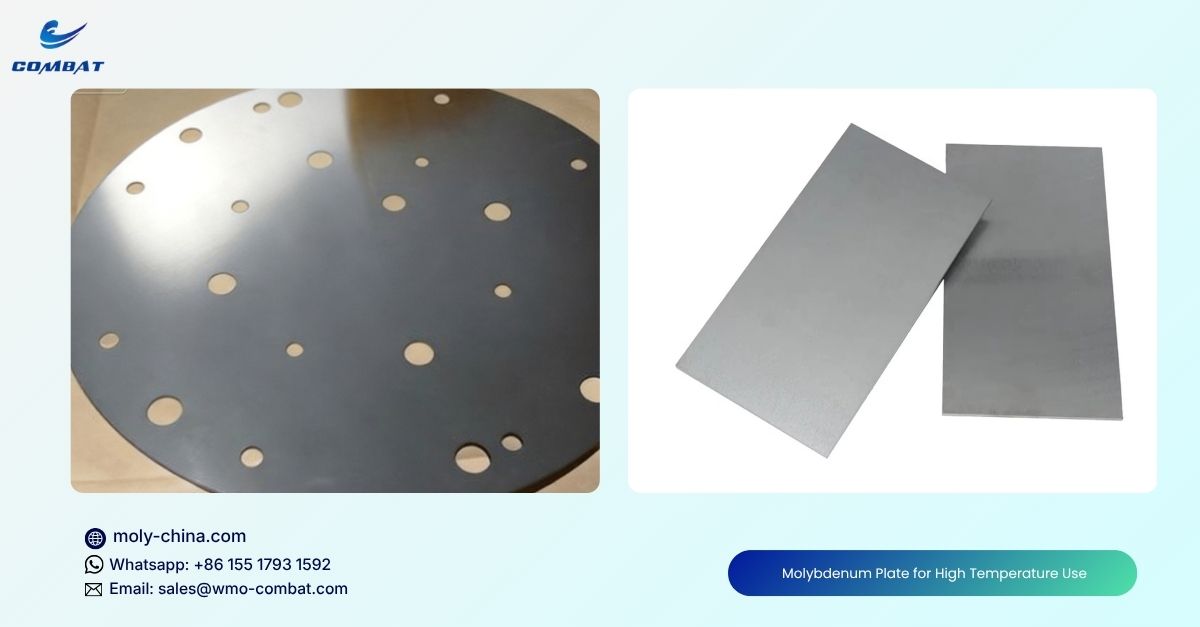
Plates with a thickness 4.8mm(0.1875 inches) are officially defined as industrial moly plates, and those with a thickness lower than this standard are classified as molybdenum sheets and molybdenum foils, which are suitable for light and thin precision accessories scenes.
In the conventional commercial supply size, the three brands of molybdenum plate specifications are common, highly adaptable, can cover the vast majority of high temperature furnace body, vacuum equipment, semiconductor tooling, aviation accessories conventional use needs. Industry mainstream supply thickness range is 4.8 mm-60mm, The conventional thickness tolerance can be controlled within ± 2%, and the tolerance of precision machined plates can be further tightened.
In terms of conventional molybdenum plate size, the width of the maximum supply of molybdenum plate can reach 600-800mm, and the length of the maximum supply of molybdenum plate can reach 1500-3000mm.
Customized molybdenum plate
The surface process specifications can be customized according to needs, including 4 mainstream types: hot-rolled black skin surface (cost-effective, suitable for common high-temperature structural parts), chemically cleaned bright surface (oxide skin removal, suitable for vacuum environment), finely ground surface (high flatness, suitable for precision machining), mirror polished surface (extremely clean, suitable for semiconductor and optical scenes).
Reliable molybdenum plate manufacturers support customized molybdenum plate size, customized surface process, according to customer drawings for cutting, grinding, polishing, finishing, at the same time can provide a complete material inspection certificate, support incoming quality inspection.
Frequently Asked Questions of Molybdenum Plate
Q1: What is the core difference between Mo1 and Mo2 plates?
The core differences are purity and impurity control standards. Mo1 purity 99.95%, extremely low impurities, no pollution risks, suitable for high-end precision scenes; Mo2 purity 99.90%, moderately relaxed impurity standards, higher cost performance, suitable for ordinary industrial high temperature scenes.
Q2: Is the strength of TZM alloy much higher than that of pure molybdenum plate?
Yes. The performance gap at room temperature is small. After the temperature exceeds 1300 ℃, the strength of TZM is about 2 times that of pure molybdenum, the recrystallization temperature is 250 ℃ higher, and the creep resistance and heat fatigue resistance are significantly better than Mo1 and Mo2 pure molybdenum plates.
Q3: Which scenes are TZM molybdenum plates mainly used?
Mainly used for 1000~1700 ℃ high temperature and heavy load conditions, including die-casting molds, forging tooling, aerospace structural parts, high temperature furnace load-bearing fixtures, crystal growth equipment, heat treatment stress accessories, etc.
Q4: Is pure molybdenum or TZM preferred for high temperature conditions?
Mo1/Mo2 pure molybdenum is selected for light load, pure heat conduction and high purity clean scenes. TZM molybdenum alloy plate is preferred for scenes with high temperature, heavy load, long-term stress and deformation resistance.
Q5: Can Mo1 plate be used in vacuum furnace equipment?
Fully applicable. Mo1 high purity plate is a high vacuum furnace heat shield, heating components, support accessories of high quality materials, very low impurity content can avoid the vacuum environment gas pollution, strong stability.
Q6:TZM alloy processing difficulty than pure molybdenum?
Yes. TZM has higher hardness and lower toughness. It is more difficult to cut, bend and form than pure moly plate. It needs special processing tools and technology, and the processing cost is slightly higher than Mo1 and Mo2.
Q7: Molybdenum plate of thickness range usually how much is it?
Industry standard molybdenum plate thickness over 4.8mm, conventional supply range 4.8mm ~ 60mm, beyond the scope can support customized rolling, cutting processing, to meet the needs of non-standard equipment.
Q8: Does molybdenum plate support custom processing?
Support. All brands of molybdenum plates can be cut to size, polished and polished, and machined precisely as required. They can be adapted to the production of non-standard accessories for various equipment and can provide a full set of material inspection reports.
Conclusion
Mo1, Mo2, TZM is the current industrial application of molybdenum plate brand, the three based on the basic characteristics of molybdenum, respectively, to adapt to different dimensions of industrial needs, there is no absolute advantage and disadvantage, only whether to adapt to the difference between working conditions.
Reasonable selection of moly plate grades can effectively improve the service life of equipment, reduce the failure rate and control the purchase cost. If you are looking for the specifications of molybdenum plates or customized molybdenum plates,we can obtain complete material certificates and technical support to meet the landing requirements of industrial projects.