

How to Choose the Right Tungsten Plate: A Buyer’s Guide
作者:kangbote 时间:2026-09-16 16:18:17
With the comprehensive performance of high temperature resistance, high density, radiation resistance and low expansion far exceeding that of ordinary metals, tungsten plate has become the preferred structural and functional material under extreme conditions. This article will help everyone to accurately match their own needs and select the tungsten sheet products with the highest cost performance and the best adaptability from the dimensions of tungsten plate basic characteristics, material difference, thickness specification, dimensional tolerance, surface technology, grade selection, processing performance, manufacturer screening, etc.
What is tungsten plates? Key characteristics
What is Tungsten Plate?
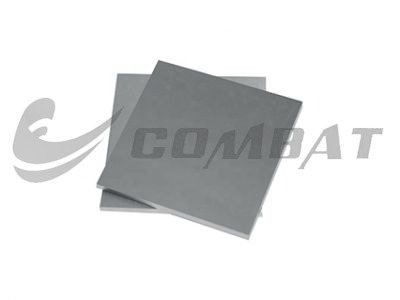
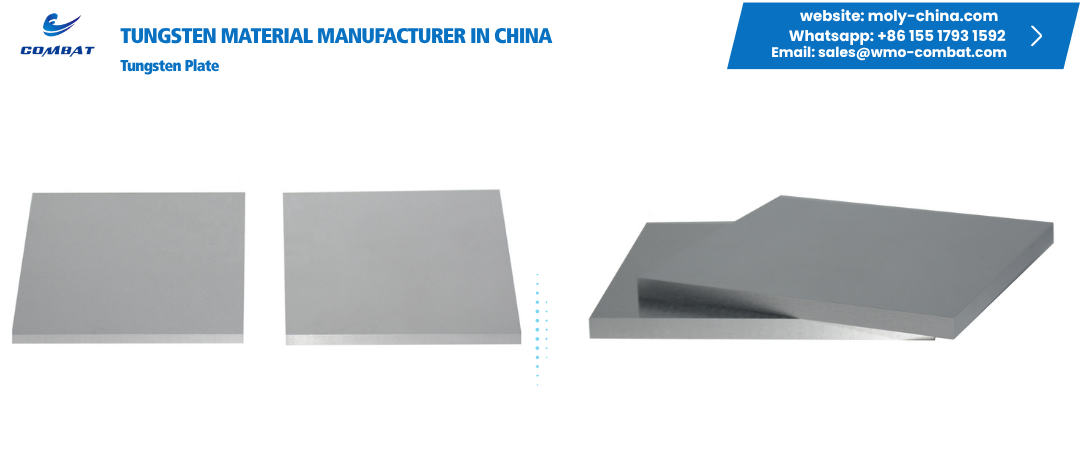
Tungsten plate is a plate-shaped profile made of high-purity tungsten metal as the core raw material. The industry's general purity standard is 99.95, and high-end customized scenarios can provide higher purity specifications. It is different from ordinary rolled metal plate, the use of powder metallurgy process precision preparation, the overall performance stability is stronger. Tungsten plate is widely used in all kinds of high-end industries with strict requirements on temperature, precision, protection and stability, covering many core high-precision fields, high-temperature furnace and heat treatment industry, semiconductor field and medical radiation protection field.
Physical and Mechanical Properties of Tungsten Plate
Tungsten is a pure metal with the highest melting point in nature. Tungsten sheet has an ultra-high melting point of 3422 ℃, which can work stably in a high temperature environment of more than two thousand ℃ without softening and deformation. The tungsten plate density can reach 19.25-19.3g/cm³, which is close to twice that of lead, and is similar to the density of gold and uranium. It is the core material for lightweight and high-density protection.
At the same time, the tungsten plate has a very low vapor pressure, in the vacuum, inert gas high temperature environment almost will not volatilize, put an end to equipment pollution problems. The thermal conductivity is stable at 170-180W/(m · K), and the thermal conductivity is excellent, which can quickly balance the heat of the equipment.
The thermal expansion coefficient of the tungsten plate is very low, only 4.5 × 10/K, and the dimensional stability is extremely strong under high temperature conditions, which is not easy to deform and crack. With the high elastic modulus of 400GPa, the overall rigidity, high temperature strength, corrosion resistance and radiation resistance are excellent. It is a special material for extreme working conditions.
How to choose different tungsten plate grade material ?
The composition, performance and applicable scenarios of different tungsten plate grades are significantly different, and accurate matching of material grades is the key to taking into account the use of performance and procurement costs.
High purity tungsten plate
Purity 99.95% tungsten plate is a special grade for high temperature resistance, high vacuum and high cleanliness scenes. It has the best high temperature strength, minimum volatilization, minimum thermal deformation, and can work stably in vacuum environment above 2000 ℃ for a long time. Tungsten plate is suitable for high-end scenes such as vacuum furnace hot zone accessories, single crystal growth equipment, semiconductor sputtering targets, plasma protection components, etc. The disadvantage is that the processing is difficult and the cost is high.
Tungsten heavy alloy plate
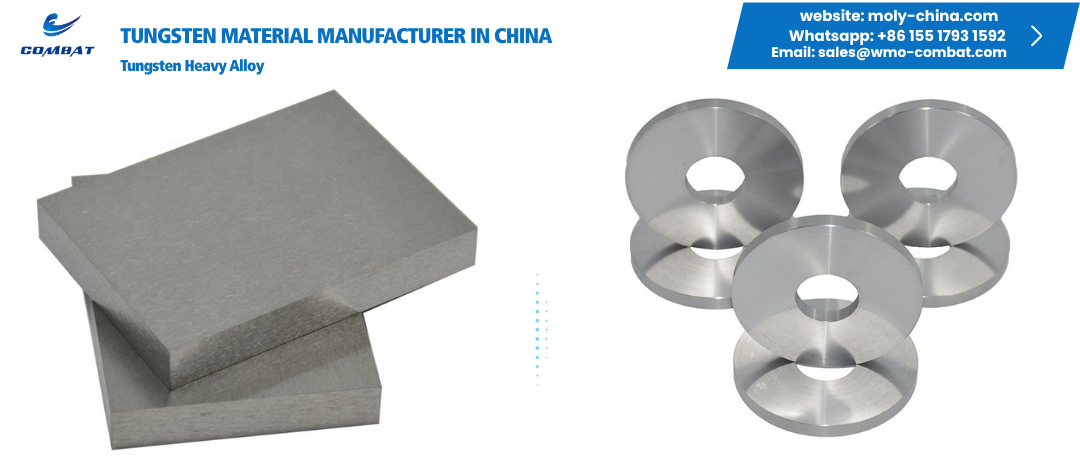
Tungsten heavy alloy plate is a two-phase composite material, the tungsten content is controlled at 90%-97%, with nickel-iron, nickel-copper toughness bonding phase, made by liquid phase sintering process, is a complementary material of pure tungsten plate.
The density of tungsten heavy alloy plate can reach 17.0-18.5g/cm³, which is close to pure tungsten plate, and the problem of brittleness of pure tungsten is completely solved. Alloy plate toughness, ductility, machinability greatly improved, can be completed by conventional machine tools, milling, drilling, cutting and other processes, processing costs are lower. However, due to the limitation of the bonding phase, the temperature resistance of the tungsten alloy plate is greatly reduced, and the bonding phase will soften and fail at 1400-1500 ℃, so it cannot be used for ultra-high temperature conditions.
W-Ni-Fe tungsten heavy alloy plate: the largest amount of tungsten heavy alloy in the industry has excellent comprehensive mechanical properties, outstanding strength, toughness, impact resistance, and vibration resistance, convenient processing and high cost performance. Nickel-iron alloy plate is used for medical radiation shielding, industrial flaw detection protection, aerospace counterweight, precision machine tool damping components, only not suitable for magnetic field sensitive, ultra-high temperature conditions.
W-Ni-Cu tungsten heavy alloy plate: non-magnetic tungsten alloy, to avoid the magnetic defects of nickel-iron alloy, corrosion resistance is better, W-Ni-Cu tungsten heavy alloy plate suitable for precision electromagnetic equipment, medical imaging equipment, marine conditions equipment. Compared with nickel-iron alloy, its strength and toughness are slightly reduced, suitable for non-magnetic, corrosion-resistant as the core requirements, the extreme mechanical performance requirements are not high.
Lanthanum doped tungsten (W-La)
Tungsten lanthanum alloy is prepared by adding trace lanthanum oxide to pure tungsten, which effectively improves the recrystallization temperature, creep resistance and room temperature toughness of tungsten material, and the processing performance is better than that of ordinary pure tungsten sheet.
Tungsten lanthanum alloy plates are widely used in welding electrodes, plasma electrodes, high-temperature precision components, semiconductor high-temperature accessories, taking into account high-temperature performance and forming ability.
How to choose the thickness of tungsten plate?
The tungsten plate thickness directly determines the structural rigidity, radiation shielding capacity, load-bearing performance and overall cost. If the thickness selection is too thin, it will lead to insufficient protection, structural deformation and equipment failure. If the selection is too thick, it will cause material waste, excessive equipment load and budget redundancy.
Tungsten plate, tungsten sheet, tungsten foil: how to choose?
According to the thickness size of the industry, tungsten products are strictly divided into foil, sheet, plate three categories, the functional positioning difference is significant, the selection needs to be accurately distinguished.
Tungsten foil: thickness <0.1mm, light and thin texture, good flexibility, mostly used for ultra-thin thermal insulation layer, precision coating, micro-protective components, the main lightweight, full coverage requirements.
Tungsten sheet: thickness of 0.1 mm-6mm, taking into account toughness and flatness, suitable for the production of thin-walled heat shield, small protective liner, precision blank substrate, can be slightly stamping, cutting processing.
Tungsten plate: thickness 5-6mm, strong rigidity, outstanding deformation resistance, sufficient machining allowance, suitable for load-bearing structure, heavy radiation shielding, precision tooling base and other high-strength working conditions.
What Tungsten Plate Thickness Do You Need?
The radiation shielding scene is the core scene of thickness selection, which needs to be accurately matched according to the radiation energy. 100keV conventional medical X-ray, 0.2mm tungsten plates can realize basic shielding, and 1-3mm thickness can realize more than 99% ray attenuation.
For high-energy gamma rays such as Co-60, the thickness of 7-9mm can achieve ten times attenuation. The thickness of 15-20mm is usually selected for industrial nuclear protection scenes, and 10%-30% safety margin is reserved to prevent radiation leakage.
0.5-5mm medium-thin plates can be selected for high-temperature heat insulation scenarios to control the weight of the equipment while ensuring heat insulation stability. Structural load-bearing, precision base scene need to choose more than 6mm thick plate, to avoid long-term force deformation.
Tungsten plate thickness, weight, cost
The weight of tungsten sheet is proportional to its thickness. The density of pure tungsten is as high as 19.3 g/cm. If the thickness is doubled, the overall weight will be doubled simultaneously. Excessive thickness will greatly increase the equipment load.
In terms of cost, ultra-thick plates require longer sintering and rolling cycles, resulting in greater raw material consumption; ultra-thin foils are also costly due to complex precision rolling processes and high scrap rates.
The optimal selection principle is: under the premise of meeting the requirements of protection, load-bearing, heat insulation and precision, select the minimum feasible thickness, put an end to blind thickening, and achieve the balance between performance and cost.
Specification for machining allowance reservation
When purchasing tungsten sheets, machining allowance must be reserved, especially for pure tungsten plate precision machining scenarios. Pure tungsten material is hard and brittle, grinding, cutting, EDM processing will produce material loss, but also may appear slight stress deformation.
It is recommended to reserve 0.5-2mm machining allowance under conventional working conditions, and the allowance shall be appropriately increased for high-precision and complex structure workpieces. Tungsten alloy sheet has better processing performance, which can appropriately reduce the reserved size and further control the cost.
Tungsten plate dimensions, tolerances and flatness: how to choose?
Dimensions, tolerances, and flatness determine the assembly accuracy, bonding effect and equipment operation stability of the tungsten plate. They are key parameters that cannot be ignored in the selection of precision equipment. The general industry standards are ASTM B760 (pure tungsten) and ASTM B777 (tungsten alloy).
Size range of conventional tungsten plate
Market standardized tungsten sheet has a fixed size range, no need to customize, faster delivery, more cost-effective. The thickness of the conventional tungsten plate covers 0.1 mm-80mm, the width of the mainstream 500-660mm, the maximum can be customized 700mm wide sheet.
The conventional length is 1500-2000mm, which can meet the needs of most industrial equipment. The thickness of the industry general standard tungsten plate includes 0.5mm, 1mm, 2mm, 3mm, 5mm, 10mm and other specifications.
Customized tungsten plate size
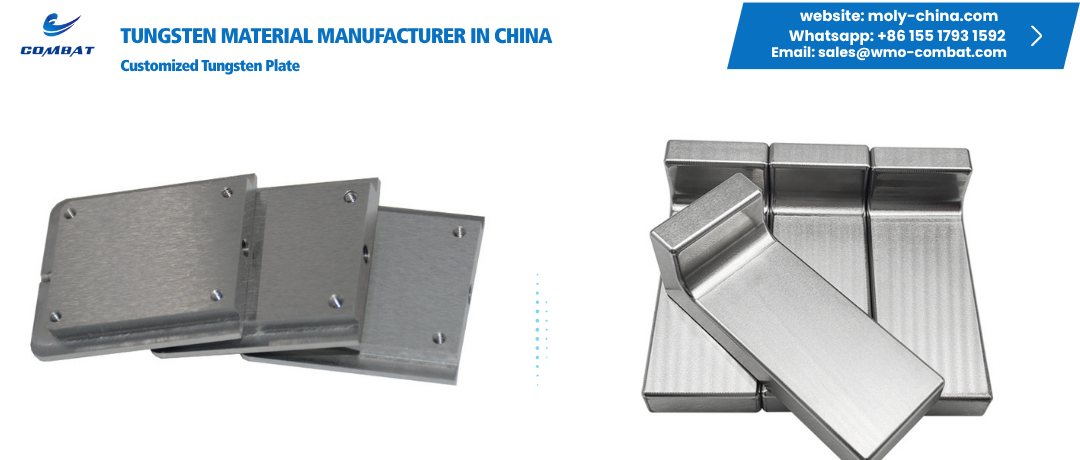
Professional tungsten sheets manufacturers can provide full-size customization services, and special length, width and thickness specifications can be customized according to drawings. Customized size can effectively avoid the problems of loss, edge chipping and precision deviation caused by on-site cutting, directly deliver finished plates, greatly improve assembly efficiency, and is suitable for batch precision workpiece procurement.
Tolerance Selection Standard
Tolerance is not the smaller the better, excessive pursuit of ultra-high precision will greatly increase the procurement cost, according to the working conditions of reasonable matching. The conventional tolerance of sheet thickness is ± 0.025-0.05mm, and the accuracy is extremely high.
The conventional tolerance of medium and heavy plates is ± 0.1-0.5mm or ± 5%-10%, which can meet most structural and protective working conditions. The width and length tolerances are conventionally controlled at ± 0.8-1.6mm, and the finishing process can be further tightened.
Standard tolerances can be used for ordinary heat insulation and counterweight scenarios; semiconductor, vacuum sealing, and precision alignment equipment require customized precision tolerance specifications.
Core Function and Selection Requirements of Flatness
Flatness is the core index to measure the flatness of the tungsten sheet, which directly affects the equipment assembly and use effect. The flatness deviation of ordinary industrial plates is less than or equal to 4%, which can meet the general working conditions. For precision scenes such as vacuum equipment, semiconductor substrates, medical collimators, etc., the flatness needs to be controlled at a deviation of ≤ 0.05-0.1mm per 100mm.
Regular manufacturers can greatly optimize the flatness of the board surface through stress relief annealing, precision leveling, polishing and polishing processes, and adapt to high-precision use requirements.
How to choose tungsten plate surface process?
The surface process of tungsten sheet directly affects the vacuum sealing, thermal conductivity, coating adhesion and equipment cleanliness. Different working conditions need to match the corresponding surface finish, and there is no need to blindly pursue mirror polishing.
Rolled surface (rolling primary color)
Factory basic process, retain the original texture of rolling, roughness Ra ≈ 3.0 μm, after the foundation in addition to oxidation, cleaning treatment, no oil, no impurities.
The lowest price, the highest cost-effective, suitable for ordinary high-temperature furnace insulation board, carrying tray, universal counterweight components, as well as the subsequent need for secondary machining of the workpiece.
Fine grinding surface
Through the precision grinding of the grinding wheel, the plate surface is flat and uniform, the parallelism is high, the roughness is stable at Ra 0.4-2.0 μm, and the dimensional accuracy is greatly improved. The fine grinding tungsten plate is suitable for semiconductor substrates, precision tooling fixtures, radiation collimators, sealing surfaces and other precision scenes that require flatness and dimensional accuracy.
Polished/electropolished surface
Mirror grade precision tungsten sheets, the roughness can be as low as Ra<0.2 μm, the plate surface is smooth and flawless, no residual impurities, and the gas adsorption capacity is extremely low. The core is suitable for high vacuum equipment, semiconductor clean workshop, medical precision instrument and electron beam optical equipment, which can effectively prevent the problems of degassing, pollution and coating shedding.
Machined surface
The tungsten plate surface cut by CNC and EDM has a roughness of Ra≈ 1.5-3μm, and can be used to process complex structures such as special-shaped, slotted and open holes. It is mostly used to customize special-shaped workpieces and non-standard structural parts, which can be followed by superimposed grinding and polishing processes according to requirements to balance accuracy and processing costs.
How to process tungsten sheet?
Many procurement failures are due to the failure to understand the processing characteristics of tungsten plates. The processing difficulties of pure tungsten and tungsten alloys are very different. Improper selection of processing methods is prone to edge chipping, cracking and scrapping.
Difficulties in processing pure tungsten plate
Pure tungsten hardness is extremely high, brittleness at room temperature, low temperature cutting is easy to produce cracks, collapse angle, ordinary machine tools, ordinary tools can not complete precision machining. In the process of machining, the tool wear speed is fast, the cutting resistance is large, and the equipment rigidity and process parameters are extremely high. It is one of the most difficult special metals in the industry.
Processing Technology of Tungsten Plate
Grinding: pure tungsten plate finishing preferred, can accurately control the thickness, flatness, plate surface without stress, no cracks, the highest precision.
EDM EDM: non-contact processing, suitable for complex special-shaped, narrow groove, thin-walled structure, completely eliminate the cracking problem caused by mechanical stress.
CNC precision machining: only applicable to tungsten alloy plates, pure tungsten sheets need to be processed with preheating process, diamond tools and low-speed shallow cutting parameters.
Processing selection recommendations
Pure tungsten precision workpiece is preferred by grinding + EDM combination process; tungsten alloy conventional structure can be directly CNC machining, higher efficiency and lower cost. It is recommended to directly select the processing service of tungsten plate manufacturer for mass customization of workpieces to avoid scrap loss and precision deviation caused by self-processing.
How to choose tungsten plate for your industry?
The working temperature, environmental atmosphere, precision requirements and functional focus of different industries are very different, and the corresponding tungsten material, thickness, process and grade selection are completely different.
Tungsten Plates for High-Temperature Vacuum Furnaces and Heat Treatment
High-temperature vacuum furnaces require materials with excellent temperature resistance, low outgassing, dimensional stability, and high-temperature strength. For applications exposed to extreme temperatures and vacuum environments, high-purity tungsten plates are commonly considered because of tungsten's very high melting point and thermal stability.
For tungsten heat shields, furnace liners, and thin high-temperature insulation components, thin rolled tungsten sheets or plates can be selected according to the furnace design and mechanical requirements.
For furnace trays, support plates, and high-temperature structural components, a thicker tungsten plate may be required to provide sufficient rigidity and resistance to deformation. The final thickness should be determined based on temperature, load, span, and operating time rather than thickness alone.
For surface condition, as-rolled, cleaned, or lightly ground tungsten plate may be sufficient for many furnace applications. Excessive polishing is not always necessary. More important factors include flatness, thickness tolerance, surface cleanliness, and dimensional stability at high temperature.
Tungsten Plates for Semiconductor and Microelectronics Equipment
Semiconductor equipment on the material purity, cleanliness, vacuum performance, dimensional accuracy requirements are very high, preferred ultra high purity tungsten plate (99.97-99.99%).
Tungsten Sputtering target back plate, PECVD cavity accessories, ion injection components, must ensure that the material is free of impurities, low gas, no magnetic interference. The thickness is mostly 2-6mm medium thin plate, and precision machining allowance is reserved.
The surface process uniformly selects fine grinding or electrolytic polishing to reduce surface roughness, reduce particle adsorption and vacuum degassing problems, and avoid polluting the wafer production environment. Tolerances and flatness are subject to high-precision standards to ensure equipment assembly and operational stability.
Tungsten Plates for Medical Equipment and Radiation Shielding
Medical CT, PET, linear accelerator, industrial flaw detection equipment, the core demands for efficient ray shielding, light and thin structure, easy processing, no radioactive pollution, preferred W-Ni-Fe tungsten heavy alloy plate.
For conventional X-ray and low-energy ray protection, 1-3mm alloy plate can be selected to meet the shielding requirements. For high-energy gamma rays and nuclear medicine protection scenarios, it is recommended to use 10-20mm thick plates and reserve a safety margin.
Magnetic-sensitive precision medical imaging equipment that needs to be replaced non-magnetic W-Ni-Cu alloy plate eliminate magnetic field interference imaging accuracy. Surface selection of fine grinding process, to ensure the precision of the collimator, protective lining plate.
Tungsten Plates for Nuclear Energy and Fusion Applications
Nuclear energy and fusion conditions combine ultra-high temperature, strong radiation, high vacuum triple harsh conditions, belonging to the high-end composite conditions, the core structure of the choice high purity tungsten plate. Core components such as stack wall protection, divertor, high-energy beam absorber, etc., rely on pure tungsten ultra-high melting point, anti-irradiation, low sputtering characteristics, long-term tolerance to extreme conditions. Auxiliary shielding, counterweight structure can choose high density tungsten alloy plate, balance performance and cost.
The industry needs to strictly review the material quality inspection report, composition purity, mechanical performance parameters, all plates need to meet high-end industrial certification standards, to ensure the safety and stability of equipment operation.
Tungsten Plates for Aerospace Industry
Aerospace conditions are divided into two major requirements: high temperature heat resistance and high density counterweight. High temperature insulation, nozzle, engine hot end structure, selection high purity tungsten plate or lanthanum doped tungsten plate improve high temperature creep resistance and extend the life of components.
Aircraft counterweight, inertial balance, damping shock components, preferred high specific gravity W-Ni-Fe alloy plate. Relying on the advantages of high density, small size and high toughness, it realizes lightweight counterweight and adapts to the working conditions of high-speed moving parts.
Tungsten Plates for Precision Instruments and Industrial Equipment
Precision machine tools, automation equipment, optical instruments counterweight, shock absorption, positioning components, no high temperature, no strong radiation demand, the core pursuit of high density, easy processing, cost-effective.
Standard W-Ni-Fe alloy plate is selected for conventional scenes, which can easily complete CNC drilling, slotting and shaping processing. Moist, marine corrosion conditions, the use of W-Ni-Cu alloy, improve corrosion resistance.
The thickness is flexibly customized according to the counterweight requirements, and the surface can be machined or polished without ultra-high precision polishing, effectively controlling the procurement cost.
How do you choose a reliable tungsten plate manufacturer?
Tungsten plate is a high-precision special material, product quality is highly dependent on the production process and quality control system, the strength of the tungsten sheet manufacturer directly determines product stability, service life and delivery capacity. Selection procurement of tungsten plate can focus on the following core standards.
With full process self-research production capacity
Manufacturers of high-quality tungsten materials must master the full chain production capacity from tungsten powder preparation, press forming, high-temperature sintering, rolling, heat treatment to surface finishing. The whole process of automatic control can strictly control the purity, density, grain uniformity, residual stress, put an end to the quality of middlemen OEM products instability, while ensuring product traceability.
Complete product coverage
Regular tungsten heavy alloy manufacturers can complete supply of high purity tungsten sheet, W-Ni-Fe, W-Ni-Cu, lanthanum doped tungsten and other products. At the same time, the corresponding product composition test report, performance parameter report and industry standard compliance certificate can be provided.
Perfect quality inspection and certification system
The reliable tungsten factory has complete testing capabilities and can complete full-dimensional testing such as dimensional accuracy, flatness, roughness, density, hardness, and non-destructive testing. Precision tungsten plate strictly follows ASTM B760, ASTM B777 industry standards, suitable for industrial, medical, nuclear and other high reliability scenarios.
Customization and processing capabilities
High-quality tungsten plate manufacturers can support non-standard dimensions, precision tolerances, special surface process customization, while providing CNC machining, EDM cutting, precision grinding, polishing and other one-stop deep processing services. Without secondary outsourcing processing, the finished workpiece can be delivered directly, greatly shortening the procurement cycle and reducing the overall procurement cost.
Industry experience and technical support
High-quality tungsten suppliers have rich experience in semiconductor, medical, high-temperature furnace, nuclear energy and aerospace projects, and can provide professional selection technical guidance. According to the user equipment conditions, temperature, accuracy, protection requirements, free optimization of the selection scheme, to avoid parameter mismatch, cost waste.
FAQ for tungsten plate selection
Pure tungsten plate or tungsten alloy plate for radiation protection?
Tungsten heavy alloy plates are preferred for most radiation shielding scenarios. Tungsten alloy shielding effect is close to pure tungsten, and easy to process, good toughness, higher cost performance. Pure tungsten is only suitable for composite working conditions that require high temperature resistance and radiation protection at the same time. High shielding requirements can choose 95%-97% high tungsten content alloy grade.
Pure tungsten sheet must be better than tungsten alloy plate?
Not necessarily. Pure tungsten has an absolute advantage only in ultra-high temperature, high vacuum and high purity scenarios. Under normal temperature, medium and low temperature conditions, the toughness, processability and cost performance of tungsten alloy are better than pure tungsten, which is a more practical choice.
What is the difference between tungsten plate and tungsten sheet?
The core is distinguished by thickness and rigidity. Below 6mm is tungsten sheet, light and flexible, suitable for lightweight protection and heat insulation; above 6mm is tungsten sheet, with strong rigidity, outstanding load-bearing and anti-deformation ability, suitable for structural support, heavy shielding and precision base.
Tungsten plate conventional can be customized maximum thickness is how much?
The thickness of conventional mass production can reach 50mm, and the maximum thickness of special customization can reach 80mm. Extra-thick plates are limited by the blank and rolling process, and the delivery period is longer, so the production feasibility should be confirmed with the manufacturer in advance.
What are the factors that affect the tungsten plate price?
Mainly includes material purity, alloy grade, thickness size, surface process, precision tolerance, customization difficulty, purchase quantity. The price of high-purity tungsten, ultra-thin precision foil, mirror polishing, and ultra-high-precision tolerance tungsten sheets is relatively higher. Bulk purchase of tungsten plates can effectively reduce the unit tungsten sheet price.
Conclusion
If you need to customize the exclusive selection scheme according to the specific equipment parameters, working condition temperature and protection level, you can consult us, professional technical team at any time to obtain accurate quotation and technical support.