

Common Titanium Grades for Medical Use
作者:kangbote 时间:2026-11-03 16:04:49
Medical grade titanium is the mainstream metal material for long-term implantation of orthopaedic, dental, spinal and trauma instruments. The choice of grade not only affects the strength, toughness and fatigue life of the device, but also directly determines whether the material certificate can pass the quality and regulatory review.
This article is suitable for implant design engineers, procurement and quality regulation personnel, dental and orthopedic device manufacturers, and traders who need to quickly establish brand awareness.
What Is Medical-Grade Titanium?
Medical grade titanium refers to commercially pure titanium or specific titanium alloys that meet stringent international standards. Its evaluation dimension covers four aspects: chemical composition, mechanical properties, biocompatibility and manufacturing control, and is suitable for long-term implantation in the human body. It is not equivalent to ordinary industrial titanium or aviation titanium. Implantation standards impose tighter limits on interstitial elements such as oxygen, nitrogen, carbon, hydrogen, and iron; even small increases in these elements will reduce fracture toughness and fatigue resistance, and weaken the corrosion resistance of the material in body fluid environments. Compliant medical titanium materials require complete traceability and organization of production under a quality system aligned to ISO 13485.
Core advantages
Excellent biocompatibility: A thin, stable, self-healing titanium dioxide (TiO₂) passivation layer is spontaneously formed on the titanium surface. This layer has high chemical inertness, strong adhesion, low tissue reaction, and lower risk of sensitization and inflammation than metals containing nickel, cobalt, and chromium.
Resistance to body fluid corrosion: the passivation layer resists the erosion of chlorine-containing body fluids, and can be quickly regenerated after the surface is damaged, inhibiting ion precipitation, pitting corrosion and long-term degradation.
High strength weight ratio: with a density of about 4.5g/cm³, titanium is stronger than many steels and has a significantly lower weight, helping to control implant volume and reduce the burden on surrounding tissues and bones.
Elastic modulus closer to bone: the elastic modulus of commonly used medical titanium is about 100-114 GPa. This value is still higher than that of cortical bone, but significantly lower than that of stainless steel and cobalt chromium alloy, which can reduce the risk of stress shielding and bone resorption.
Support osseointegration: bone tissue can directly form a bond with the titanium surface; the surface bone bonding effect is more obvious after texturing or porous treatment, and the support is fixed without cement.
Fatigue and durability: medical titanium materials can withstand long-term cyclic loads and meet the fatigue design requirements of load-bearing implants; actual service performance depends on structural design, surface treatment and process control.
Image compatibility: titanium is a non-ferromagnetic material and is safe for patients to undergo MRI; compared to high-density metals, titanium has relatively low attenuation under X-rays and facilitates postoperative imaging evaluation.
Process adaptability: titanium is resistant to repeated sterilization and supports multiple manufacturing routes such as machining, forging, additive manufacturing of porous structures, metal injection molding, and more.
ASTM F Series Medical Grade Titanium
ASTM Medical Devices Committee (F04) issued the F series of standards, is the United States and the world widely used in the implant titanium material specification; the corresponding material in the ISO 5832 series many equivalent standards. The following table summarizes the four most core criteria.
|
Standard No. |
Cover Material (Titanium Grade) |
UNS Number |
Primary Medical Use |
|
ASTM F67 |
Unalloyed Commercial Pure Titanium Grade 1-4 |
R50250 / R50400 / R50550 / R50700 |
Dental Implants, Mesh, Craniomaxillofacial Plates, Pacemaker Enclosures, Low Medium Load Components and Devices |
|
ASTM F136 |
Ti-6Al-4V ELI(Grade 23) |
R56401 |
Load-bearing orthopedic implants, spinal hardware, trauma fixings and high-stress dental components |
|
ASTM F1472 |
Standard Ti-6Al-4V(Grade 5) |
R56400 |
Surgical instruments, fixed hardware and components that do not require ELI's highest toughness |
|
ASTM F1295 |
Ti-6Al-7Nb (no vanadium alloy) |
R56700 |
An alternative alloy scheme for load-bearing implants as a vanadium-free option for Ti-6Al-4V ELI |
The standard provisions will be revised periodically, and the current version of the publication date shall prevail when it is written and purchased. The use in the table is a typical application at the material level, and the final selection still needs to combine the device design and regulatory path.
Commercially Pure Titanium CP:Grade 1-4(ASTM F67)
|
Brand |
UNS Number |
Minimum tensile strength (typical for annealing) |
Minimum yield strength (annealing typical) |
Minimum elongation |
Typical use |
|
Grade 1 |
R50250 |
About 240 MPa |
About 170 MPa |
Approximately 24% |
Pacemaker housing, mesh, fine low-stress molded parts |
|
Grade 2 |
R50400 |
About 345 MPa |
About 275 MPa |
Approximately 20% |
Dental components, surgical instruments, low and medium load implants |
|
Grade 3 |
R50550 |
About 450 MPa |
About 380 MPa |
Approximately 18% |
Structural implant components that require higher than Grade 2 strength |
|
Grade 4 |
R50700 |
About 550 MPa |
About 485 MPa |
Approximately 15% |
Some dental implants, bone plates, screws and orthopedic hardware |
The table is the typical minimum value of annealing state, and the allowable value and measured value of different product forms (rod, plate, wire) are subject to the material warranty (MTR) of the furnace batch.
Key points of titanium grades at all levels
Grade 1: the softest, highest plasticity and strongest forming ability of the four grades are suitable for low stress parts such as complex stamping, deep drawing and thin-walled shells.
Grade 2: the "working grade" in CP titanium is the most balanced between corrosion resistance, formability and strength, and has the widest application.
Grade 3: intermediate strength file, used for structural parts with slightly higher strength requirements, but still need to retain a certain degree of formability.
Grade 4: the highest strength grade of CP titanium is commonly used in dental implants and small pieces of fracture fixation that require higher strength; its formability is weaker than that of low-grade CP titanium.
Ti-6Al-4V:Grade 5 and Grade 23 ELI
Grade 5 Standard Alloy (ASTM F1472)
Grade 5(Ti-6Al-4V,UNS R56400) contains about 6% aluminum and 4% vanadium. The minimum tensile strength in the annealed state is about 895 MPa, and the strength-to-weight ratio is outstanding.
The titanium grade is widely used in surgical instruments, fixed hardware and trauma devices. In scenarios where the highest fracture toughness of the ELI version is not required, Grade 5 is more advantageous in terms of cost and market availability.
Grade 23 ELI(ASTM F136)
The Grade 23 is the Ti-6Al-4V ultra-low clearance version (Extra-Low Interstitial, ELI,UNS R56401). Its nominal composition is close to Grade 5, but the limits for oxygen (usually ≤ 0.13%), nitrogen, carbon, iron and hydrogen are significantly tightened.
In the annealed state, the minimum tensile strength of Grade 23 is about 860 MPa and the minimum yield strength is about 795 MPa. Although the nominal strength is not higher than Grade 5, its plasticity, fracture toughness and fatigue crack growth resistance are better.
Grade 23 is the workhorse alloy for permanent weight-bearing orthopedic implants (hip and knee stems, spinal rods and nails, trauma fixation) and high-stress dental components, and is often considered the benchmark choice for weight-bearing implants in titanium alloys.
Grade 7(Ti-0.2Pd)
Grade 7 adds about 0.12-0.25 palladium (UNS R52400) on the basis of pure titanium, the mechanical properties are close to Grade 2, and the minimum tensile strength after annealing is about 345 MPa.
The main function of palladium is to improve the resistance of the material under reducing acid environment and crevice corrosion conditions. Its standard is based on ASTM B265, B348 and other general titanium standards, not the F series of main implant standards.
In the medical field, Grade 7 titanium is used for special equipment, instrument parts or pharmaceutical related components, rather than conventional structural implants. Although the biocompatibility is good, it should not be the first choice for load-bearing implant alloys.
Grade 9(Ti-3Al-2.5V)
Grade 9(UNS R56320) titanium contains about 3% aluminum and 2.5 vanadium, commonly known as "half 6-4", has a strength between CP titanium and Grade 5, and has an annealed minimum tensile strength of about 620 MPa.
It retains good formability, weldability and cold workability. Seamless implant tubing may be referred to ASTM F2146; common medical titanium applications include catheter-type components, intubation instruments, and certain delivery devices.
It should be noted that the alloy is widely used in the field of aviation hydraulic pipe and leisure products, and the medical end belongs to the special grade of subdivision and cannot be marked as the main alloy of load-bearing implant.
General Comparison Of Commonly Used Medical Titanium Grades
The following table summarizes the composition, standard, typical mechanical level and role positioning of eight common medical titanium grades. The value is the typical minimum value or approximate value in the annealing state, which is used for horizontal comparison of grades; the actual purchase is subject to the actual measurement in the warranty book corresponding to the product form.
|
Brand |
Key points of ingredients |
Key criteria |
Minimum tensile strength (approx.) |
Minimum yield (approx.) |
Minimum extension |
Primary Medical Roles |
|
CP Grade 1 |
unalloyed titanium, with the lowest oxygen |
F67 |
240MPa |
170MPa |
Approximately 24% |
High formability and low stress parts, shells, meshes |
|
CP Grade 2 |
Unalloyed titanium, balance gear |
F67 |
345MPa |
275MPa |
Approximately 20% |
Dental components, instruments, medium and low loads |
|
CP Grade 3 |
Unalloyed titanium, medium strength |
F67 |
450MPa |
380MPa |
Approximately 18% |
Structural Implant Parts |
|
CP Grade 4 |
unalloyed titanium, the strongest in CP |
F67 |
550MPa |
485MPa |
Approximately 15% |
Dental implant, plate nail hardware |
|
Grade 5 |
6% Al + 4% V |
F1472 / B348 |
895MPa |
828MPa |
Approximately 10% |
Surgical instruments, fixed hardware |
|
Grade 23 ELI |
6% Al + 4% V, Ultra Low Gap |
F136 |
860MPa |
795MPa |
Approximately 10-14% |
Load-bearing orthopedic and dental implant reference alloys |
|
Grade 7 |
Pure Titanium +0.12-0.25% Pd |
B265 / B348 |
345MPa |
275MPa |
Approximately 20% |
Special parts for special corrosion-resistant environment |
|
Grade 9 |
3% Al + 2.5% V |
B265 / B348 / F2146 |
620MPa |
483MPa |
Approximately 15% |
Tubing, special instruments and delivery components |
In terms of elastic modulus, CP titanium is about 100-105 GPa, and Ti-6Al-4V alloy is about 110-114 GPa; both are higher than bone tissue, but better than stainless steel and cobalt chromium alloy.
All grades rely on TiO₂ passivation for corrosion resistance and biocompatibility; strength ranking does not equal selection priority.
Strength, toughness, formability, standard compliance and fatigue requirements need to be weighed together, and tensile strength alone can lead to misselection.
Select by medical device type
The following table maps common device categories to preferred grades, applicable standards and rationale for selection, which can be used as a quick comparison during the design input phase; detailed mechanical verification and regulatory validation still need to be completed by the engineer.
|
Device Category |
Preferred Grade |
Applicable Standards |
Selection reasons |
|
Hip/knee stem, femoral components |
Grade 23 ELI |
F136 |
Optimal combination of strength, toughness and fatigue resistance under high cyclic loading |
|
Spinal rod, pedicle screw, fusion device |
Grade 23; optional Ti-6Al-7Nb |
F136 / F1295 |
Fatigue performance and biocompatibility; vanadium-free solutions as an alternative |
|
Trauma plates, screws, intramedullary nails |
Grade 23 or CP Grade 4 |
F136 / F67 |
Gr23 for high load fixing; Gr4 for medium strength and remolding |
|
porous coating substrate, bone into the surface substrate |
CP Grade 2 / Grade 4 |
F67 |
Good corrosion resistance and bone bonding foundation, commonly used as porous layer or plasma spraying substrate |
|
Root-shaped dental implants, abutment |
CP Grade 4 or Grade 23 |
F67 / F136 |
Gr4 takes into account both osseointegration and strength; Gr23 for narrow diameter or high stress design |
|
Healing abutment, temporary parts, mesh |
CP Grade 1-3 (Gr2) |
F67 |
Fordability and biocompatibility are preferred, and strength requirements are relatively low. |
|
Surgical instruments (forceps, scissors, needle holders, drills) |
Grade 5; Lightweight parts available CP Gr2/4 |
F1472 / F67 |
Strength-to-weight ratio and cost balance, non-implanted high-cycle force scenarios |
|
Pacemaker/ICD Housing |
CP Grade 1 / Grade 2 |
F67 |
High formability, long-term corrosion resistance and mature clinical history |
|
Craniomaxillofacial plate, reconstruction, neurosurgical implantation |
CP Grade 2-4 |
F67 |
Complex anatomical shaping and osseointegration are preferred |
|
Conduits, Tubing, Conveying Components |
Grade 9; Grade 7 for special corrosion resistant parts |
F2146 / B Series |
Selection driven by formability, weldability or special corrosion resistance requirements |
Orthopaedic Implants
The core contradiction of load-bearing orthopedic devices is fatigue life and fracture toughness, so Grade 23 ELI dominates. The modulus of titanium alloy is lower than that of cobalt chromium alloy, which helps to reduce the stress shielding, but the design still needs to match the reasonable cross section and surface structure.
When the anatomical shape of the trauma fixation is complex, it can be weighed between Grade 23 and CP Grade 4 titanium: Gr23 is selected for the one with large force, and Gr4 is selected for the one with high requirements for molding and bone integration.
Dental Implants
Dental root-shaped implants are mainly made of CP Grade 4 and Grade 23 titanium. Grade 4 titanium can meet most dental loads with surface treatment due to its purity, corrosion resistance and bone bonding properties. Grade 23 titanium can be turned to narrow diameter implants or high stress posterior tooth area design.
The healing abutment, temporary member and mesh have lower strength requirements and pay more attention to formability and biocompatibility. CP Grade 1-3 is more suitable.
Surgical instruments and cardiovascular instruments
Surgical instruments are not constrained by high cyclic loads in the receptor, and Grade 5 titanium is a common choice for strength, wear resistance and cost advantages; some lightweight or corrosion-resistant hand-held components will use CP Grade 2 titanium and Grade 4 titanium.
Cardiovascular devices need to distinguish the division of materials: pacemaker shells are mostly made of high-formability CP titanium; stent products are more commonly used with nitinol (Nitinol) under shape memory requirements, titanium is more used for specific components, shells and delivery structures, and titanium should not be generally claimed for all stent scenarios.
How To Choose A Medical Titanium Grade?
The selection of medical titanium grades should be carried out in a fixed order to avoid locking the grades first and then pushing backwards. The following six steps cover application requirements, mechanical properties, biocompatibility, standard compliance, supply form and traceability documents.
Step 1: Clear application requirements
First characterize the type of device: permanent weight-bearing implants, dental components, low-to-medium-load molded parts, surgical devices, non-structural housings, special corrosion-resistant parts or tubing. The type of application determines the priority of subsequent mechanical and standard requirements.
Step 2: Evaluate the required mechanical properties
Review tensile strength, yield strength, elongation, and reduction of area against material certificates, and obtain fatigue data when conditions permit. The difference of elastic modulus between various medical titanium grades is limited, and the selection focus is still on the combination of strength, toughness and formability.
Step 3: Confirm biocompatibility requirements
CP titanium meets high purity requirements with minimal composition; Titanium alloys such as Grade 23 have long-term clinical acceptance. It is important to note that the biological evaluation of the finished device (ISO 10993 series) is not superseded by a material standard and that the surface condition (mechanical, polished, sandblasted, anodized, porous coating) is verified separately.
Step 4: Verification of applicable standards
Permanent implants must use materials referenced in F67, F136, F1472, F1295 or corresponding ISO 5832 standards; non-implanted parts of instruments can be selected according to instrument specifications and additional control requirements. Industrial standard grade materials shall not be used as implant grade materials.
Step 5: Choose titanium supply form
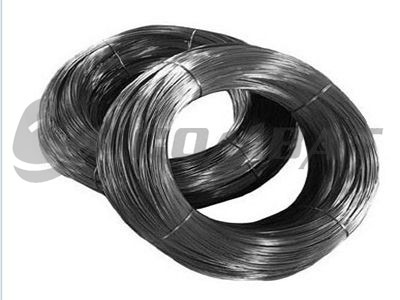
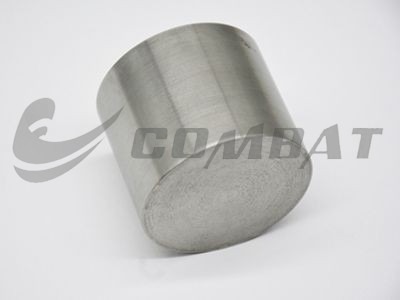
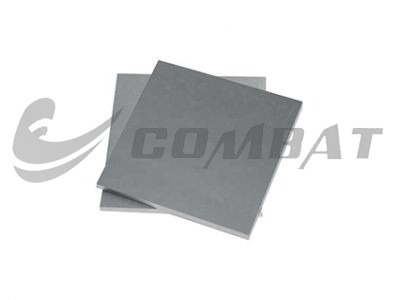
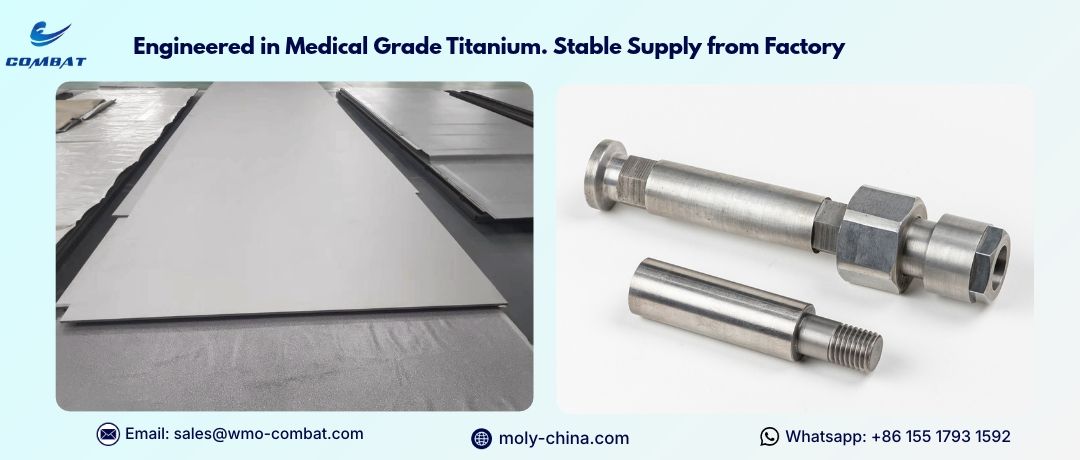
Titanium rods are used for machining shanks, screws and instrument shafts; plates are used for plates, meshes and housings; titanium wires are used for fixing wires, orthodontic wires, springs and guide wires; titanium tubes, powders and forgings correspond to specific process routes. The selected form must be covered by the corresponding standard and the supply status (annealing, cold work, etc.) must be specified.
Medical Titanium Supply: Plate, Rod/Bar Stock, Wire And Others
|
Supply Form |
Common grades |
Typical process |
Typical use |
|
Plate/Sheet/Strip |
CP Gr2, Gr4;Grade 23; Gr5 for device |
Laser cutting, stamping, bending, CNC machining |
Bone plate, maxillofacial reconstruction plate, mesh, shell, flat blank |
|
Round bar/bar stock |
Grade 23 predominant; CP Gr2/4; device Gr5 |
CNC turning and milling, machining; often annealed |
Joint stem, bone nail, spinal rod, instrument shaft and dental blank |
|
Wire |
CP Gr1/Gr2; Gr23 for high strength requirements |
Drawing, winding forming, annealing control |
Cage wire, orthodontic wire, ligating wire, guide wire, spring small piece |
|
Pipe |
Grade 9; Special parts Gr7 |
Seamless pipe drawing and welding (as required) |
Cannula instruments, delivery assemblies, special medical instruments |
|
Forgings/Castings/Powder |
Corresponding brand according to F620 / F1108 / F1580 |
Forging, casting, additive manufacturing, coating |
High integrity structural parts, complex components, porous implant structures |
Titanium plate and sheet
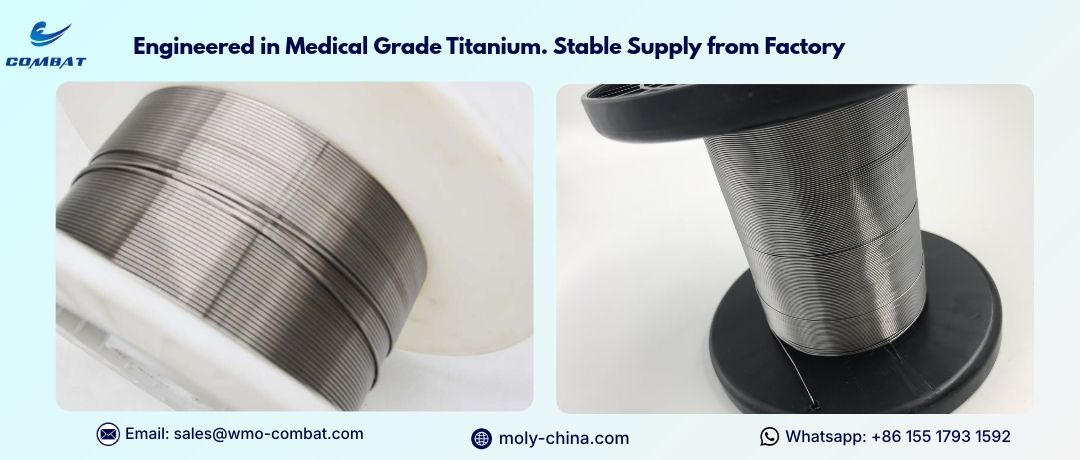
The titanium plate strip faces parts that require a wide surface area, press forming, or flat machining. CP grades have good formability, and Grade 23 titanium plates are used for plates that require higher strength. Titanium plate surface can be pickled, grinding, polishing or pretreatment coating state.
Titanium Bar and Round Bar
Titanium rods are the main form of machined implants and instruments, with diameters covering small screws to large-size shanks. Key implant rods often require straightness, dimensional accuracy and ultrasonic testing.
Titanium wire
The titanium wire faces fine, flexible or wound molded parts. CP low-grade wire has good plasticity and is easy to draw and bend; titanium alloy wire is used for fixing and spring parts that require higher strength. Wire surface cleanliness, straightness and mechanical consistency requirements are strict.
How To Choose A Reliable Medical Titanium Supplier?
Medical titanium is not an ordinary commodity, but a key input to determine the long-term reliability and compliance of the device. When selecting titanium material suppliers, it is recommended to check from the following 5 aspects.
Process control determines clinical reliability: gap components, microscopic tissue and surface state of the small deviation, may shorten the fatigue life or reduce the corrosion resistance. A reliable medical titanium supplier performs stable process control for each furnace batch.
Compliance Certificates are not replaceable: materials must be produced or purchased in accordance with the F series or ISO 5832 standards, and the certificate must be complete and accurate.
Traceability and batch consistency: from smelting to finished product holding furnace number, composition report, measured mechanical results and processing records can be traced back; stable performance between batches can reduce processing parameter drift, rework and verification costs.
Technical support capabilities: suppliers who are familiar with the grade, form and standard boundaries can assist in judging material selection, interpreting certificates, handling ultrasonic testing, special surfaces and custom size requirements to avoid over-specification or under-specification selection.
supply chain stability and risk prevention and control: reliable inventory and production scheduling, delivery communication and contingency plans can reduce the risk of supply interruption, and the choice of auditable sources can also reduce the compliance risks of industrial materials posing as implants.
Frequently Asked Questions about Medical Titanium
Q: What is the most commonly used titanium grade for medical implants?
Grade 23(Ti-6Al-4V ELI), corresponding to ASTM F136, is most commonly used for permanent weight-bearing implants, which are widely used in hip and knee stems, spinal hardware and trauma fasteners. Commercially pure titanium Grade 2 and Grade 4(ASTM F67) are also very common in dental implants, low-load parts and molded parts.
Q: What is the difference between Grade 2 and Grade 5 Titanium?
Grade 2 is a commercial pure titanium with moderate strength, excellent formability and corrosion resistance; Grade 5(Ti-6Al-4V) is an aluminum alloy titanium alloy with higher strength and fatigue resistance, but lower plasticity and formability. Grade 2 is suitable for molded parts and low and medium load parts, while Grade 5 is mostly used for surgical instruments and structural hardware.
Q: Is Grade 23 better for medical implants than Grade 5?
For permanent, high-cycle weight-bearing implants. Grade 23's ultra-low gap design improves fracture toughness, plasticity and fatigue crack growth resistance; Grade 5 is still applicable in equipment and cost-sensitive scenarios. Whether to choose depends on the force mode and standard requirements, rather than the size of the number of grades.
Q: What material does ASTM F136 refer?
ASTM F136 is the specification standard for deformed Ti-6Al-4V ELI alloy (UNS R56401, Grade 23) for surgical implants, which specifies the chemical composition, mechanical properties and microstructure requirements, and is one of the core material standards for load-bearing implanted titanium alloys.
Q: What is the difference between ASTM F67 and ASTM F136?
F67 covers unalloyed commercial pure titanium Grade 1-4, emphasizing biocompatibility, corrosion resistance and formability, and its strength increases from Grade 1 to Grade 4. F136 covers high-strength Ti-6Al-4V ELI alloy, facing load-bearing components with higher fatigue and toughness requirements. In short, F67 corresponds to pure titanium and F136 corresponds to high strength ELI alloy.
Q: Is commercially pure titanium suitable for medical applications?
Fit. CP Grade 1-4 conforming to ASTM F67 is mature in applications such as dental implants, craniomaxillofacial plates, meshes, pacemaker housings, etc. It is especially suitable for instruments with high purity, moldability and bone bonding priority but low ultimate strength requirements.
Q: What titanium grades are commonly used for orthopedic implants?
Grade 23 ELI(ASTM F136) is the leading brand of load-bearing orthopaedic implants, covering joint replacement, spinal system and trauma hardware; CP Grade 4 is also used for some plate nails and low-load orthopaedic components; Ti-6Al-7Nb(F1295) appears in some designs as a vanadium-free alternative.
Q: What are the supply forms of medical titanium?
The most common are plates/sheets, bars (mainly round bars) and wires; in addition, pipes, forgings, castings and powders (for coating and additive manufacturing). Each form shall be covered by the corresponding standard and attached with the furnace batch traceability certificate.
Q: How does the purchaser verify the quality of medical titanium materials?
Material certificates citing specific F-series (or ISO 5832) standards, chemical composition reports with interstitial elements, measured mechanical results for specific furnace batches and forms, furnace number traceability information, and evidence of quality system alignment with ISO 13485 should be requested and checked. Only materials marked with industry standards such as B348 and B265 should not be used for permanent implants.
Q: Can medical titanium plate, rod and wire be customized?
You can. Reliable suppliers of medical titanium materials usually support customized dimensions and tolerances, state of supply (annealing, cold work, etc.), surface treatment and special inspection (such as ultrasonic inspection). Customization requirements shall be included in the purchase order and the corresponding standard, status and inspection results shall be specified in the material certificate.
Conclusion
In the design and titanium procurement stage, it is recommended to first determine the device category and load conditions, and then combine the supply form to screen the brand, and finally check the certificate and standard version. If you need to further check the selection of grades, obtain samples of material warranty, or provide drawings and application condition evaluation boards, rods and wire customized specifications, COMBAT, as a titanium material processing factory with 17 years of manufacturing experience, can stably supply medical grade titanium materials.